Vincent Fantauzzo pauses. He drops his head then raises it slowly, this time looking into the distance. “I can still hear her voice,” he says, spreading his arms on the table in front of him while he opens the doors to a special corner inside his memory.
You can tell he doesn’t share this story often, if at all. Childhood recollections can be like that, especially those locked-away moments of crystallised inspiration that help determine life later on.
“It was at our local shopping centre,” he says, speaking like it was yesterday. “I was kneeling on the back seat of our family car and staring out the back window as we drove through the car park. Mum was yelling at me to sit down and put my seat belt on, but I couldn’t. I just kept staring at it, hoping the driver would rev the engine and speed past us."
"I’d never seen anything like it.” Vincent Fantauzzo recalling the first time he saw a Porsche 911 as a child
Some first encounters stay with us throughout life. This is certainly the case for Vincent Fantauzzo as he recounts the first time he saw a Porsche 911 in real life. Growing up in one of Melbourne’s toughest working class neighbourhoods made this pivotal sighting a rare moment, but its importance can’t be overstated. It was more than a story about a kid’s first ‘wow’ moment with a sports car. No, it was much more than that. It pushed the first domino in a chain of events that would later thrust him to the pinnacle of the art world as a renowned painter, one whose works would permanently influence and advance portraiture.
Cars
“I will always remember that little Datsun 120Y we had when I was a kid,” he says with a laugh while he gently stores away his 911 moment. “It was like the Flintstones car; you could see the ground through the floor,” referring to its rust-decayed structure. “Mum would use scissors or a wooden spoon attached to the broken shifter to changes gears. And when it wouldn’t run we’d tap the starter motor with a hammer or push it down the street while mum clutched it.”
These colour-rich experiences became the ground layer for Vincent’s later years, especially when it came to four wheels.
“My first car was a VG Valiant Pacer. It had a 245 (cubic-inch) engine and three-speed but I swapped it for a 265, added triple Webers, a different gearbox and lowered it.
"I had RX7s and other rotaries and I’d always upgrade their engines and turbos.
“I used to get the Trading Post newspaper on a Tuesday morning to see what engines and parts my mates and I could afford to buy.
“I'm very good at pulling things apart, but my memory is so bad,” he says, referring to the constant need to work around his ADHD and dyslexia.
“I’d build stuff and it would work but sometimes there would be parts left over and I’d think, ‘Where does that go?’” he says, laughing. “But it still worked.”
These colour-rich experiences became the ground layer for Vincent’s later years, especially when it came to four wheels.
Journey
For some people, his full-time battle with focusing his attention might appear to be insurmountable. But not for Vincent.
“I couldn’t read or write when I was at school but I had to keep myself busy in class. When I had to write something from the chalkboard at the front of the room I would just draw pictures. I drew all day. I couldn’t read what I was looking at so I’d draw graffiti, pictures of people and cars.
“I loved cars. I had a 911 Matchbox car and I constantly drew it from every angle. I learned a lot of my drawing skills with all of those 911 sketches.
“I called the car ‘frog eyes’ back then because of its round eye-like headlights and wide rear end.”
These car sketches were more than a distraction, despite Vincent’s belief that “I never thought it could be something more.” That turning point came later after he found an outlet in boxing, and his redirection in life came from the most unlikely source.
“It was my coach who changed that. I’d done a drawing of two famous Australian boxers, Lionel Rose and Johnny Famechon. He said he thought my drawing was better than my boxing, and I was a good boxer. That was my real starting point in art.
“I was in my mid-20s when I managed to wrangle myself into university, despite my lack of schooling. Life kind of changed then.”
Art
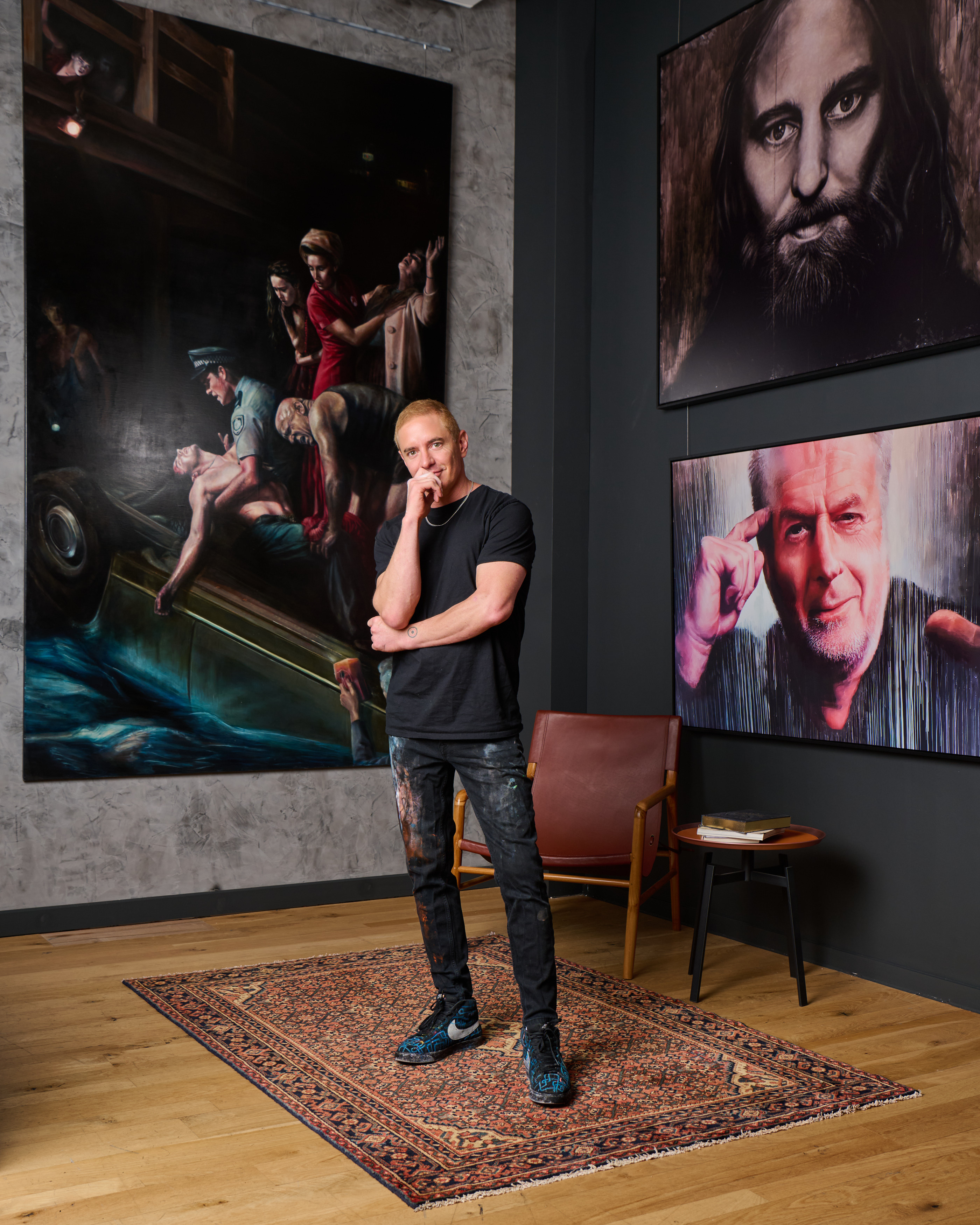
The open space inside Vincent Fantauzzo’s Melbourne gallery is a metaphor for the man himself. Each brick in the exposed walls could easily represent every painstaking brushstroke he’s made, and the solid structure they create signal the enduring quality of his work.
But it’s only when you study the small and incredibly detailed pencil sketches that adorn the ground floor’s right-side wall do you make the most unexpected discovery: a glimpse into the raw firebox that seems to fuel part of his creative drive. These illustrations are special. Unlike the hypnotic portraits on the surrounding walls, these comparative miniatures give glimpses into his essence.
"I learned a lot of my drawing skills with all of those 911 sketches."
“I’m trying to achieve what people say isn’t possible in art. And I’m trying to do for art what chefs have done for cooking in recent years. That is, I want people who are passionate about art to say, “I can do this.”
It’s a critical mission for this celebrated artist whose portraits have claimed the Archibald People’s Choice award four times, the Doug Moran National Portrait Prize twice and the Archibald Packing Room Prize.
“Artists have always been relevant. They’ve been respected thinkers and philosophers throughout time,” he says, before delving into the major historic periods when painters and sculptors have helped steer civilization, from the time of indigenous paintings to the Renaissance and today. “We need art to keep things real.”
Looking in the mirror, what does he see in himself as an artist?
“For me, art is the most instinctive translation of what’s going on in the world. When you choose to be an artist, you’re thinking about life all the time, and you’re thinking about how to translate what you see into something visual or sculptural. And art makes people see these things.”
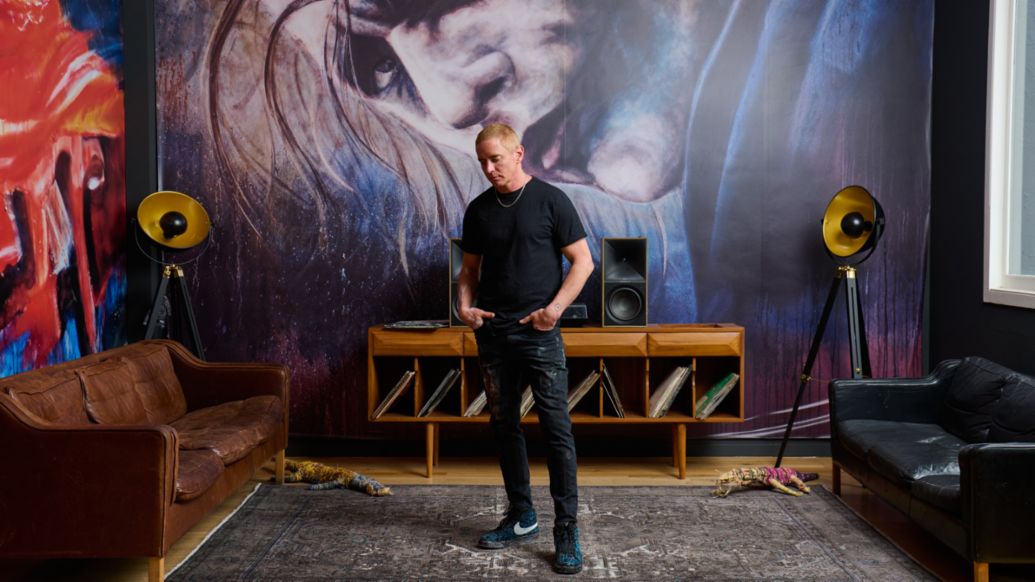
Spend some time absorbing his photorealistic paintings and much more emerges than detailed faces. He extracts kaleidoscopes of feelings from his portrait subjects and he conveys them with millimetre-perfect brushstrokes.
“Because of my learning difficulties, I learn everything through people. I was the kid who asked too many questions all the time. I couldn't find out any other way.
“Every time I do a portrait I can feel the person’s energy. The hair on my skin will stand. I’ll get really hot or become cold. It’s a physical reaction for me and it comes out in the image.
“When I paint a prime minister or politician, I learn about their world. It’s the same with a singer, football player or friend; they’re all new discoveries for me.”
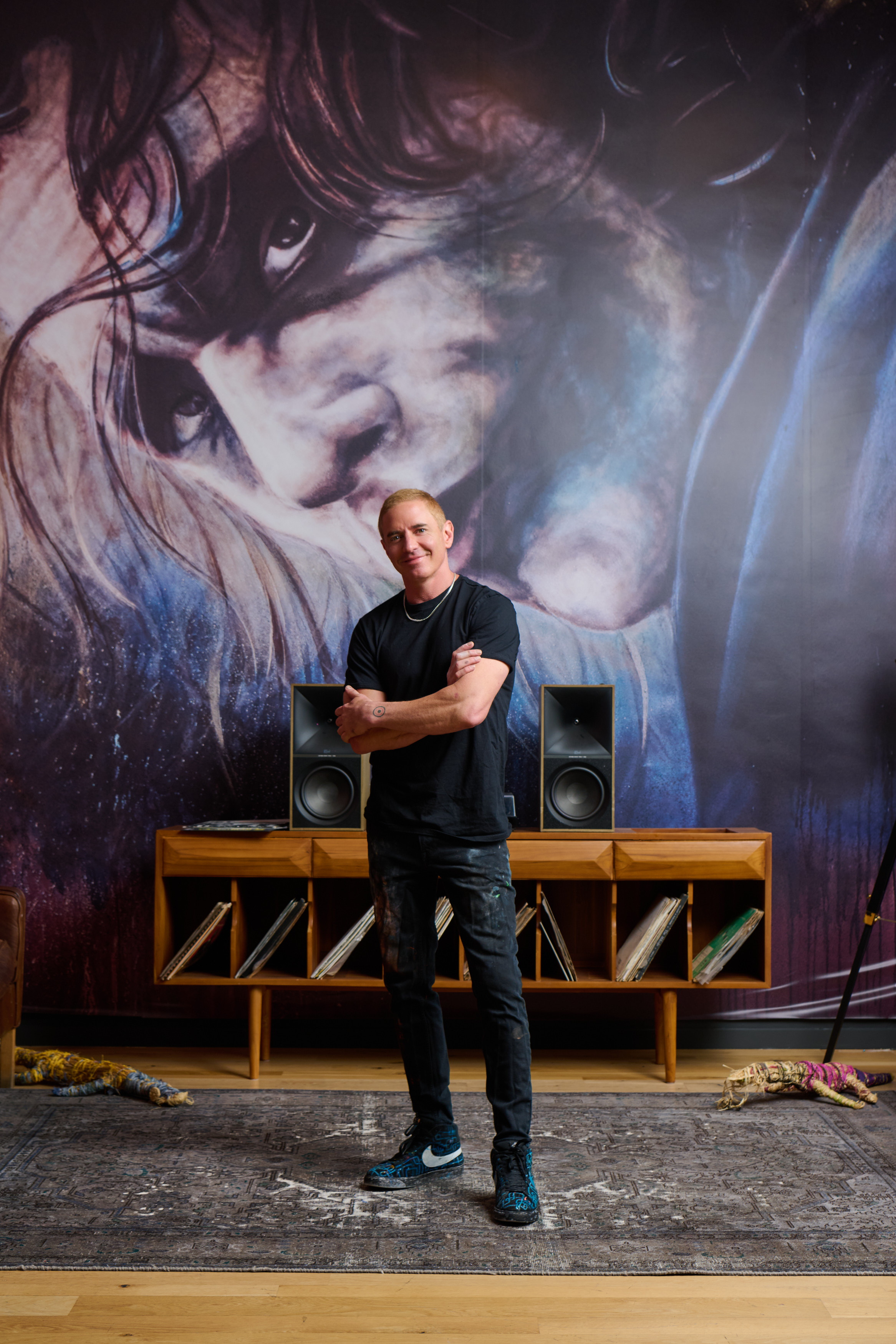
Remarkably, so is part of his process.
“I very much go into each painting without a plan,” he says. “Partly because I can't remember what I did last time. Even the physical act of painting; I can't remember how I did the last one, so I just put all the paints on the canvas. I try to be as instinctive as possible.”
And the most important part of every work?
“The essence of the person is everything. To capture it means connecting with them. I don’t have someone sit in front of me for hours, feeling all self-conscious; I take thousands of photos. Sometimes I film them. I ask them questions and we talk and I relive these conversations over and over as I paint.”
His method is powerful. Vincent Fantauzzo’s portraits concentrate the complex multitudes of a person’s essence into a single, forceful image in the way a jet engine transforms air by inhaling it in vast quantities and thrusting it through a single, focused nozzle.
He has painted some of Australia’s biggest names, including Hollywood legends like Baz Luhrmann, Hugh Jackman and Heath Ledger, whose portrait was some eight years in the making and is “one of my most important paintings.”
Vincent says these and many other famed portrait subjects all share common threads. One of them is fearlessness. He says ambition and self-belief also run rich through all of them. They’re just some of the observations he’s studied in his quest to “discover some of the secrets about the algorithms of success and happiness and interesting people.”
His works go a long way to unearthing the answers he’s chasing. ‘Talent’ doesn’t explain the cognitive and emotional impact of his art. As a word it just falls short. His works glow with fearless performance and power, thanks in part to their breathtaking precision and the obvious magnitude of effort each one requires.
“I have an incredible stamina to make art. I could do this all day. I could do it without eating or sleeping. I can't get enough of it. I don't have enough time to do what I want to achieve.”
It’s a creative hunger he might never satisfy, and this is good news. It means more opportunities for everyone to enjoy his creative gold, which he is currently applying to an unexpected background for the first time.
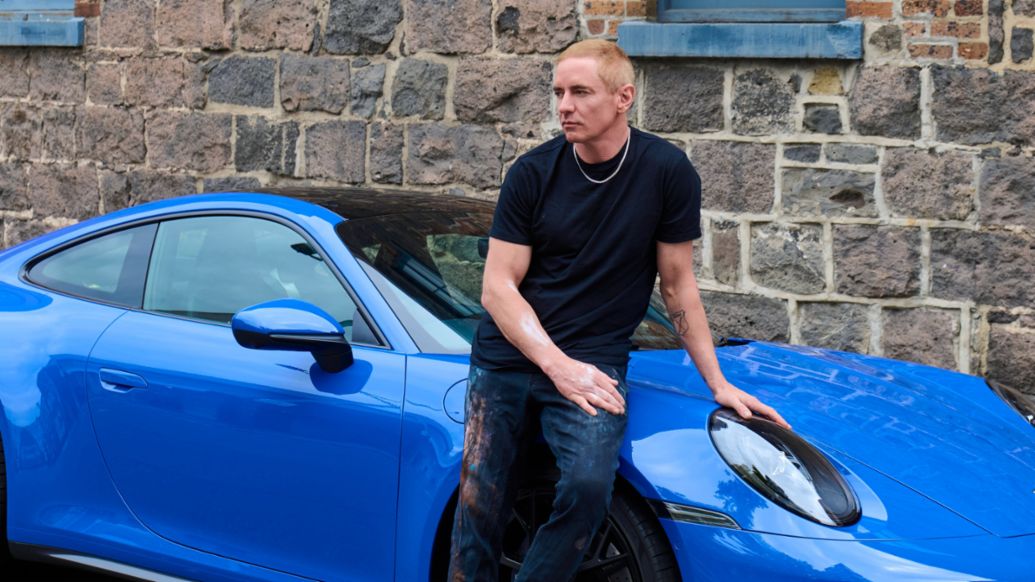
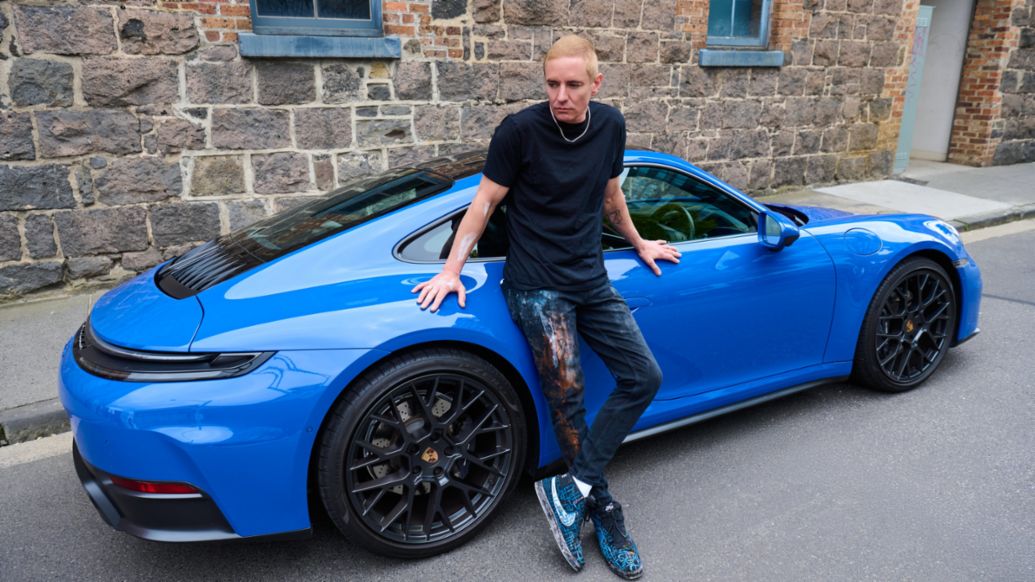
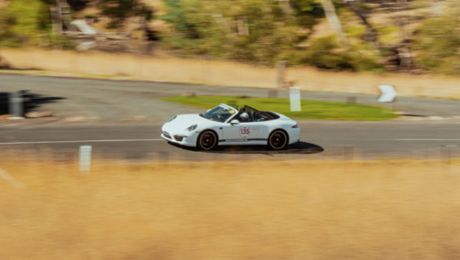
“I’m using a different canvas for a special project,” he says. “It’s the bonnet from a Porsche 911. It’s a very Australian composition because, to me, Porsche is very Australian, despite originating overseas. It’s been here longer than I have.
“The essence of the person is everything. To capture it means connecting with them." Vincent Fantauzzo
“I’ve chosen Australian landscape tones because this country’s colours are unlike anywhere else.”
The artwork will express his connection to the place he calls home and the special moments that have linked him to Porsche since his boyhood days, one of which came flooding back recently.
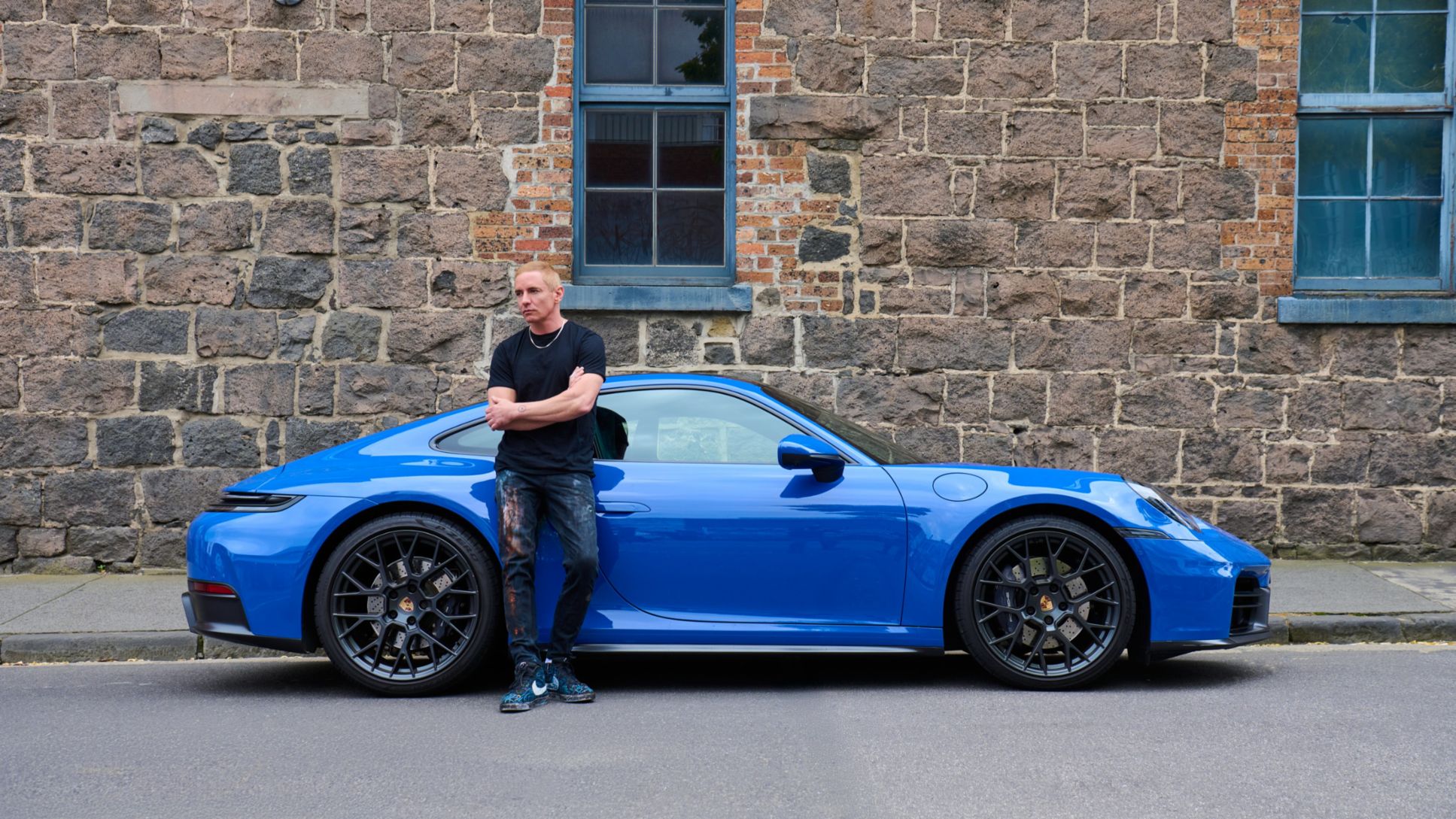
“As soon as I jumped into this blue 911 I went straight home to collect my two boys to take them for a drive. My eldest son’s first words were, “Dad, this is so cool!” and then he said something that took me back to that shopping centre car park all those years ago. I didn’t expect it. It hit me deeply because I could hear my mum’s voice when he said it.
“I’m so proud of you.”
The Fantauzzo Gallery is located in South Yarra, Melbourne and is open to the public.
Images: Marten Ascenzo
 Lifestyle