The ReSC system was developed at the Volkswagen Group and serves as an overarching due diligence approach for procurement. The goal is to identify and avoid or minimize human rights and environmental risks along the supply chains based on a systematic risk assessment. The system supports enhancing suppliers’ sustainability contributions.
The ReSC system begins before the agreement of specific delivery times and purchase prices. Indirect suppliers are also taken into account on an ad hoc and risk related basis.
The ReSC system consists of several sequential elements:
1. Risk assessment: Identification of possible risks in the supply chain.
2. Standard measures for all direct suppliers: Implementation of proactive and reactive actions including the Code of Conduct for Business Partners, the supply chain grievance mechanism, media monitoring, the sustainability rating (S-rating) and training direct suppliers and employees.
3. Deep dive measures for high-risk areas: Use of specific tools such as the raw materials due diligence management system (RMDDMS) and the human rights focus system (HRFS), as well as collaboration with external partners to refine the concept of sustainability in the supply chain.
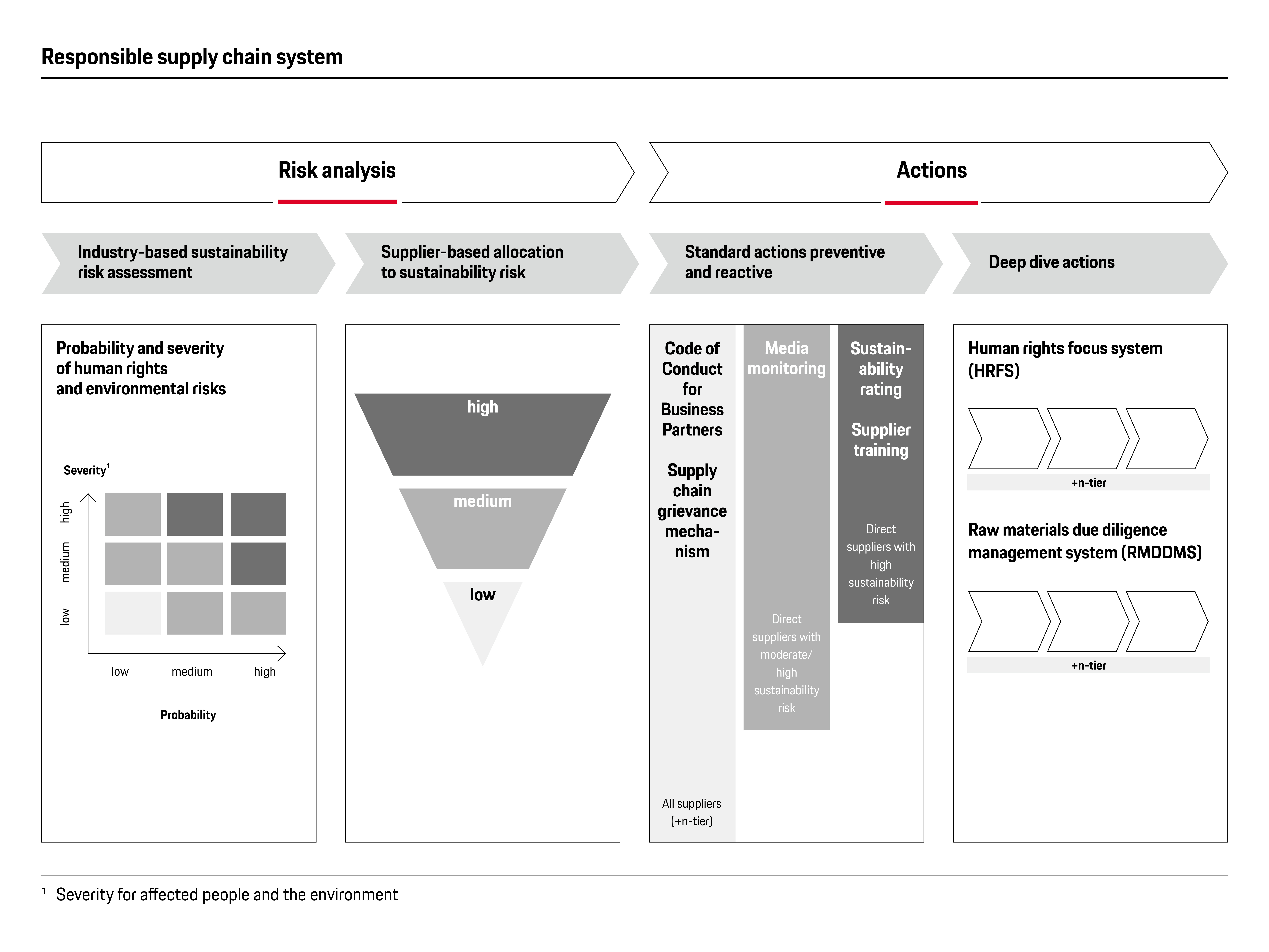
The system is embedded at several levels within the Volkswagen Group. The implementation at Porsche takes place in close coordination with experts from the Volkswagen Group‑wide “Sustainable Procurement” network. There are regular reviews of the effectiveness of the actions implemented as part of the ReSC system.