Supply chain
Porsche has taken measures to reduce the Macan’s CO₂ emissions in the supply chain. This is why, for example, CO₂-reduced aluminium and electricity from renewable energy are used.

The definition of CO₂-reduced aluminium
The CO₂-reduced aluminium used in the Macan caused fewer CO₂ emissions per kilogram in the manufacturing process than is the case with the average primary aluminium used in the EU. This is aluminium that has not been further processed into semi-finished products (e.g. sheets) or components.
The average CO₂ footprint of aluminium in the EU is calculated by European Aluminium, for example. According to European Aluminium’s Environmental Profile Report for the European Aluminium Industry, published in November 2024, the greenhouse gas potential of the average primary aluminium used in Europe is 9.7 kg CO₂e/kg of aluminium.
CO₂e stands for CO₂ equivalents – a unit of measurement used to standardise the climate impact of different greenhouse gases. To reduce complexity, the term 'CO₂' is used on the model page.
Use of CO₂-reduced aluminium in the Macan
For the Macan, Porsche requires direct suppliers of selected components use CO₂-reduced aluminium. The frame of the high-voltage battery is an example of this. For a large portion of the aluminium used (over 50kg), the CO₂ footprint of the component has been reduced by approximately 59%, from the average of 9.7 kg CO₂e/kg of aluminium used in Europe to 4.0 kg CO₂e/kg of aluminium.
The wheels available for the Macan are another example. Through the use of CO₂-reduced primary and secondary aluminium, the expected greenhouse gas potential of aluminium used for the wheel variants has been reduced to an average below 4.0 kg CO₂e/kg of aluminium.
Use of electricity from renewable energy
A key change lever for reducing CO₂ emissions in the supply chain is the use of electricity from renewable energy.
High-voltage battery cell production is one of the processes with particularly high electricity requirements. That is why Porsche has obliged its direct supplier of high-voltage battery cells to solely use electricity from renewable energy.
Production
Porsche reduces CO₂ emissions during production of the Macan in Leipzig by using electricity from 100% renewable energy and largely meeting heating requirements with renewable energy.
The Porsche production plant in Leipzig has only been using electricity from renewable energy since 2017. To achieve this, Porsche has been using its own photovoltaic systems since 2021, with a total output of almost 10 MW peak load, among other solutions. The required heat is mostly generated through biomass and balanced biomethane. In 2024, these made up over 90%. Balanced biomethane means that a quantity of gas withdrawn from the gas network corresponds to the quantity of biomethane fed into the network at another point.
Use phase
Porsche is supporting the development of wind and solar energy plants to cover the expected electricity demand of the Macan fleet based on a driving distance of 200,000 km (~124.274 mi) at certified consumption.
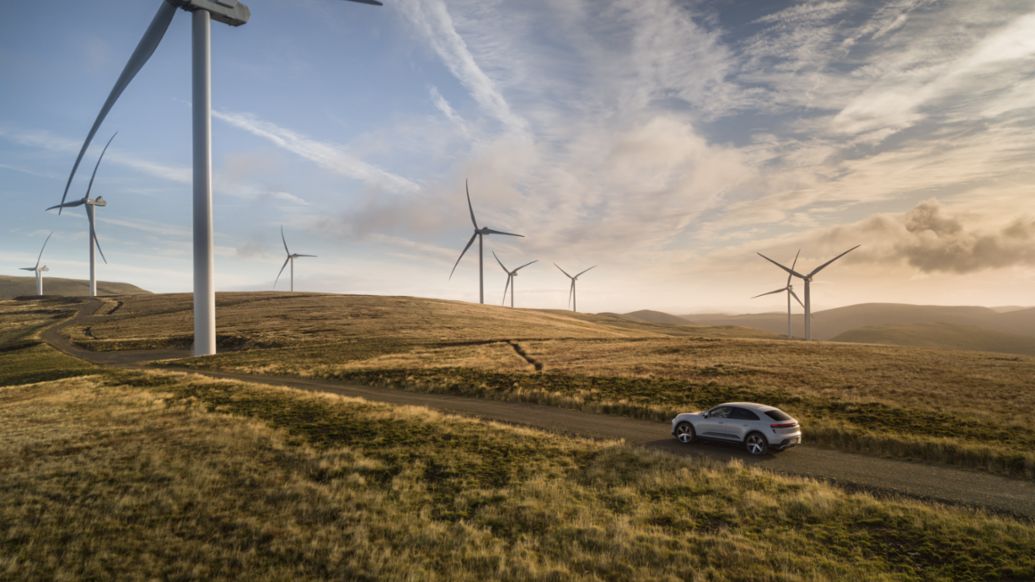
With every new fully electric vehicle, additional electricity requirements arise due to charging during the vehicle use phase. To meet this demand in Europe, Porsche is supporting the creation of new wind and solar capacities. The energy this generates is fed into the local power grids.
Porsche uses a model-based approach aiming to cover the increased demand for renewable energy that is expected to be triggered by the growing fully electric Macan fleet. To achieve this, the expansion of wind and solar power capacity in the European electricity supply networks is being supported – this capacity is of sufficient scale to cover the model-based energy consumption of the Macan new vehicle fleet in Europe.
The exact generation capacity of wind and solar energy plants depends on the weather (wind and sun radiation). Porsche uses the average expected output of the plants it supports to project the anticipated generation capacity. This indicates the amount of electricity the plant can exceed or fall short of with a likelihood of 50%. Porsche financially supports the expansion of required wind and solar capacity by entering into ten-year contracts with project partners, such as plant builders and/or operators, together with other companies within the Volkswagen Group. Under the agreements, Porsche commits to paying a fixed amount per unit of energy produced, thereby increasing the plant operator’s planning security and contributing proportionally to the financing of the new plant. In return, Porsche acquires the certificates of origin (EACs: Energy Attribute Certificates) for the electricity fed into the grid and its 'ecological properties'. Cancelling the certificates prevents double usage and double trading by third parties.
The calculation of the model-based expected electricity demand
For vehicles in Europe (EU+3 (Iceland, Norway, UK)), the region-specific average consumption value is calculated based on an assumed mileage of 200,000 km (~124.274 mi) per vehicle over ten years. The assumed mileage of 200,000 km is based on the recommendation of the VDA guideline 900-100.
Porsche has the procedure audited annually by an independent expert.
Recycling
Porsche strives for responsible and resource-conserving use of raw materials as well as long-term use of vehicles and the components used in them.
Porsche, for example, has developed an in-depth repair concept for the Macan high-voltage battery that is available worldwide through Porsche Centres and partner workshops. If the battery needs to be repaired, errors can be diagnosed and defective components can be replaced. This also makes it possible, for example, to replace individual battery modules. These measures can enable the battery to be repaired in a more resource-saving and cost-efficient manner. This ensures that the raw materials used in the battery remain in use for a longer period.
Even at the end of the battery’s life, Porsche places the highest priority on responsible management of these materials. To this end, Porsche invested in the battery recycling scale-up cylib in May 2024 via the venture capital unit Porsche Ventures. The innovative process developed by cylib allows for the recovery of approximately 90% of the high-voltage battery raw materials (weighted by mass for lithium, graphite, nickel, manganese, and cobalt). In the future, cylib plans to recycle 60,000 tonnes of end-of-life batteries annually across all manufacturers at a new industrial facility.