Fundamental information about the group
Business model
Purpose of the company
“In the beginning, I looked around and could not find the car I dreamed of. So I decided to build it myself.” These famous words from Ferry Porsche describe the aspiration of the Porsche AG Group. Its business purpose is to manufacture and sell exclusive sports cars and engines of all kinds as well as other parts and components for these and other technical products. In addition, the purpose of the company includes performing development work and design engineering, including vehicle and engine construction; consulting and development in the field of data processing as well as the production and distribution of data-processing products; sale of merchandise and commercial exploitation of brand rights, including those containing the word “Porsche”. Also included are all other activities that are technically or economically related, including the commercial exploitation of intellectual property rights. Financial services are another business purpose, in particular finance and mobility services for customers and dealers.
Organization
Dr. Ing. h.c. F. Porsche Aktiengesellschaft (“Porsche AG”) is the parent company of the Porsche AG Group (Porsche AG and its fully consolidated subsidiaries) and has its registered office in Stuttgart. Further information can be found in the list of shareholdings pursuant to section 313 of the German Commercial Code (HGB). Notes to the consolidated financial statements – 50. List of shareholdings
The structure of investments in Porsche AG remained unchanged from the fiscal year 2024. Volkswagen AG indirectly holds, via Porsche Holding Stuttgart GmbH, 75.4% of Porsche AG’s share capital. Porsche Automobil Holding SE directly holds around 12.5% of the share capital. The remaining share capital is in free float.
The Porsche AG Group consists of the automotive and financial services segments. The reconciliation of the segments to the Porsche AG Group relates to transactions between the two segments that are subject to elimination. The activities of the two segments cover the five regions Germany, Europe without Germany, North America excluding Mexico, China including Hong Kong as well as the region Overseas and Emerging Markets, which includes the remaining countries and regions.
Notes to the consolidated financial statements – Segment reporting
Automotive segment
The activities of the automotive segment cover the vehicles business field as well as the other business fields services and design. The vehicles business field includes the procurement, production, development and sale of vehicles as well as related services.
Procurement
Procurement is centrally organized at the Weissach site and has a global network of suppliers. This enables the Porsche AG Group to purchase production materials and capital goods as well as services worldwide in the required quality. In this context, the Porsche AG Group is also focusing on start-ups and software suppliers. Through the integration of the procurement organizations of the Volkswagen Group brands, the Porsche AG Group is able to leverage synergies through improve davailability of production materials and cost advantages.
Production
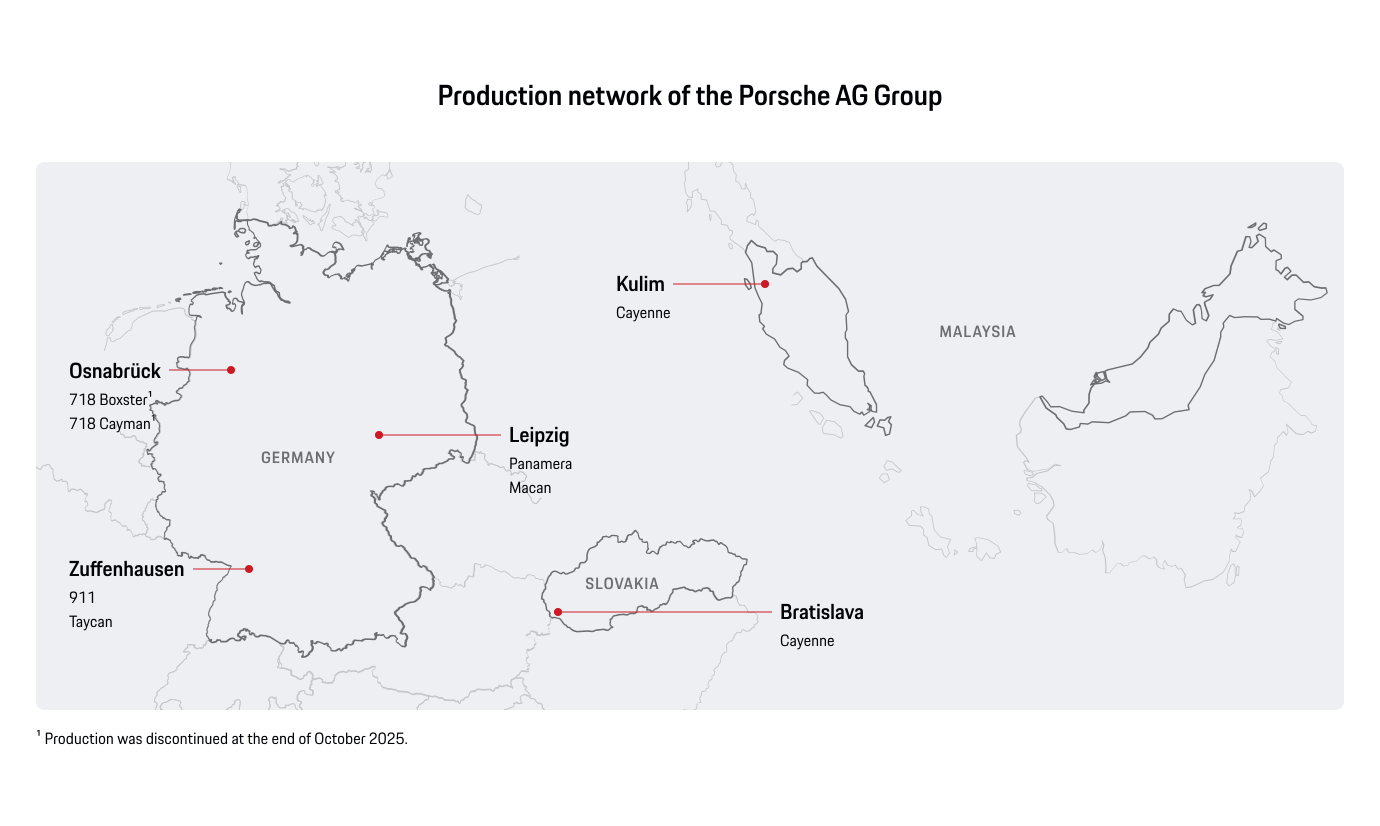
The headquarters of Porsche AG and the production facilities for the Taycan and 911 model series as well as customer sports vehicles from Porsche Motorsport are located in Stuttgart-Zuffenhausen. A control and production principle focused on quality and flexibility allows the assembly of the two-door sports cars of the 911 model series on a single production line at the main plant in Zuffenhausen. The flexible production system allows highly individual customer wishes to be integrated directly into series production. In the future, it will be possible to produce electric, two-door sports cars alongside models with boxer engines. An extended assembly line with automated guided vehicles (AGVs) and the creation of a custom testing and finishing area are some of the measures that have been taken to achieve this. The Porsche Taycan is manufactured on a separate line designed exclusively for electric vehicle architectures.
The Porsche AG Group also maintains a production facility in Leipzig, where the Macan and Panamera model series are produced. In recent years, the production facility has developed into a competence center for electromobility within the Porsche AG Group. Porsche Leipzig is able to produce three different drive types in a highly flexible manner on the existing production line: all-electric vehicles, plug-in hybrids and pure internal combustion engines.
For the Cayenne model series, the Porsche AG Group uses other production sites. The Cayenne series is produced at the Volkswagen Group’s multi-brand site in Bratislava, Slovakia. Some models of this series are assembled at a third-party assembly plant in Kulim District, Kedah, Malaysia. These are intended for the Malaysian market and, since 2024, also for the Thai market. The Volkswagen Group also had the capacity to produce the 718 series at the Osnabrück plant on a contract manufacturing basis. Production was discontinued at the end of October 2025. In addition to this, the Porsche AG Group operates a pilot series center in Sachsenheim as a central production facility to provide prototype vehicles for future Porsche series models. Production
Development
Weissach is home to the Porsche Research and Development Center, where Porsche vehicles are developed from first sketch to series production. Weissach is also home to the development of infotainment and connect functions as well as vehicle-related digital solutions. The Shanghai development site complements these development activities with specific solutions for the Chinese market. Research and development
Sales
The sales network comprises over 900 sales partners in more than 120 markets worldwide. Within this sales network, 18 legally independent importers and 16 legally independent Porsche dealer companies are part of the Porsche AG Group. Deliveries
All brick-and-mortar retail formats follow the “Destination Porsche” retail concept, which has already been rolled out in more than 200 of the over 800 Porsche centers worldwide since the end of 2020, and over 400 others are to follow by the end of the decade.
Indirect online sales for the Porsche AG Group are conducted via its digital platform and sales partners. The digital vehicle search can now be accessed in over 100 markets around the globe. Porsche dealers use this platform to offer their immediately available new and used vehicles online. This includes basic models as well as exclusive variants.
Financial services segment
The financial services segment includes the leasing business, dealer and customer financing as well as mobility services for Porsche brand vehicles and other finance-related services.
In selected markets, the segment’s services are also offered for other brands of the Volkswagen Group, in particular the Bentley and Lamborghini brands. The segment includes the products and services of Porsche financial services companies, which, depending on the market, are provided by the company itself or in cooperation with local partners.
Strategic direction of the Porsche AG Group
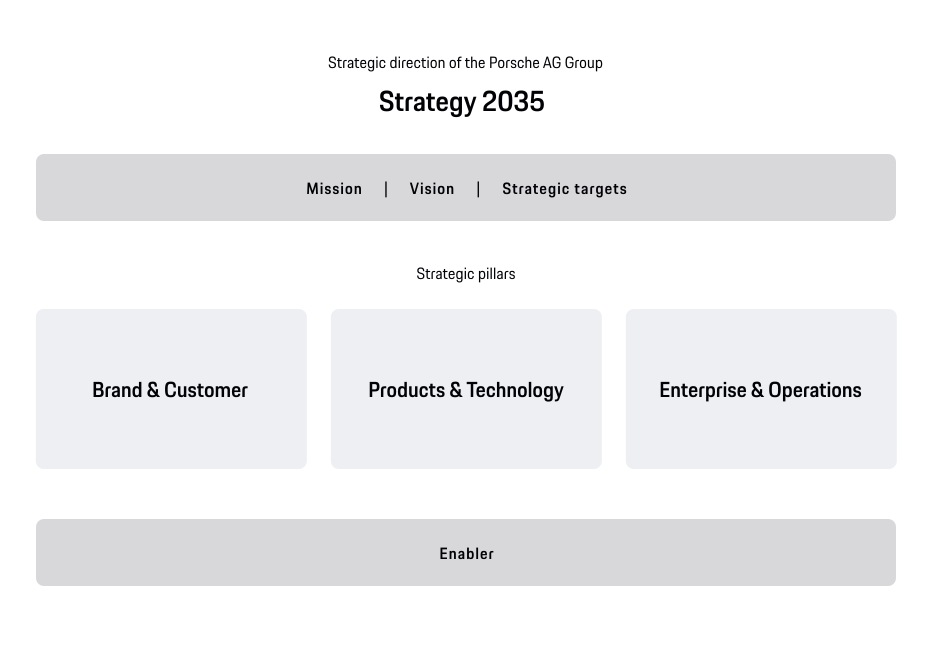
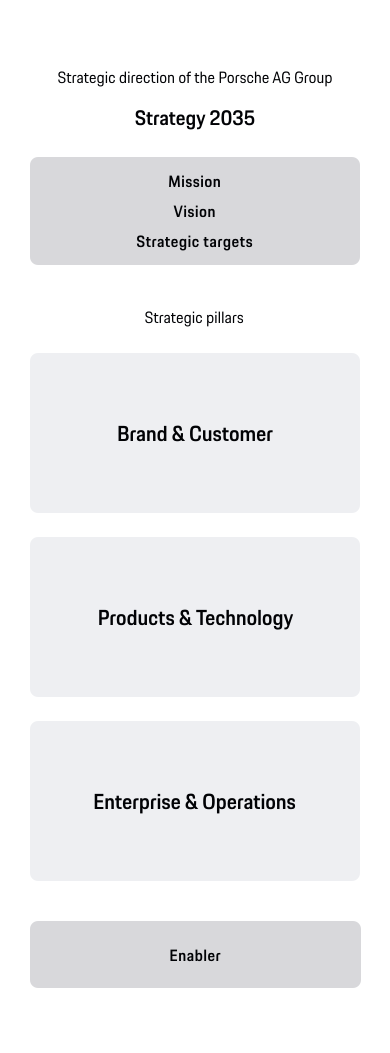
With its Strategy 2035, the Porsche AG Group is establishing the necessary guidelines to meet the demands of an increasingly volatile and complex market environment. By evolving its Strategy 2030 Plus into Strategy 2035, the Porsche AG Group aims to lay the foundation for long-term resilience and profitability. Strategy 2035 reflects the accelerating pace of change in the automotive industry, particularly in the areas of technological innovation, regulatory changes and shifting customer needs. Strategy 2035 is to apply from the reporting year 2026 onward.
As it currently stands, Strategy 2035 focuses on the further development and sharpening of strategic priorities. The previous “Customers” and “Products” cross-functional strategies of Strategy 2030 Plus will be transferred into two strategic pillars: “Brand & Customer” and “Products & Technology.” A new introduction is the “Enterprise & Operations” strategic pillar, which puts the focus on the operational base and the global value chain. In line with an integrative approach to sustainability, the previous “Sustainability” cross-functional strategy will become an enabler of Strategy 2035. Similarly, the content of the “Transformation” cross-functional strategy will also be fully transferred to the enablers. Together, the enablers “Organization & Digitalization,” “Product & Service Quality,” “Team Performance” and “Sustainability” form the basis of Strategy 2035.
Each strategic pillar focuses on clearly defined topics. These topics are intended to underscore the strategic direction and increase transparency. Together, they contribute to the group’s corporate goals. The strategic goals serve as a benchmark and long-term ambition. They measure the success in making the strategy operational and support management along the core stakeholder groups: customers, society, employees and investors. The vision statement summarizes the strategy’s contents, aiming to define and clarify the ambition for 2035.
Strategy 2035 has a clear goal: to strengthen the competitiveness of the Porsche AG Group, ensure the attractiveness of the Porsche brand and create the conditions for profitable growth in an environment characterized by technological disruption and global challenges.
“Brand & Customer” strategic pillar
The “Brand & Customer” strategic pillar aims to focus our actions on the brand and the relationship with customers. The goal is to secure the value and exclusivity of the Porsche brand for the long term and to create excitement among customers throughout the entire purchase and ownership phase. Strategy 2035 focuses on three areas: Brand Positioning, Target Groups and 360° Customer Experience. The aim is to sharpen the brand profile, create a consistent and unmistakable customer experience across all touchpoints and ensure the attractiveness and exclusivity of the Porsche brand now and in the future.
As a modern brand, the Porsche AG Group is pursuing the goal of further expanding its international customer base and tapping into new target groups. Tailor-made community formats and exclusive events are designed to strengthen brand loyalty and deepen relationships with customers. At the same time, efforts to enhance networking across all touchpoints along the customer life cycle are to be intensified in order to ensure a consistent and personalized experience for our customers. The targeted development of growth markets aims to form the basis for sustainable, value-driven growth.
“Products & Technology” strategic pillar
The “Products & Technology” strategic pillar defines the direction that the product portfolio and the technological base will take in the coming years. It addresses the topics of Product Identity & Portfolio, Offer Structure & Complexity as well as Vehicle Concepts & Key Technologies.
The Porsche AG Group is committed to an attractive and flexible product portfolio that integrates high-performance combustion engines, plug-in hybrids and electromobility. Strategy 2035 includes postponing the market launch of certain all-electric vehicle models and continuing to offer combustion and hybrid models for a longer period in order to take account of the slower transition to electromobility. The customization options are to be further strengthened by expanding the special request programand the exclusive manufacture. At the same time, the strategic pillar pursues the goal of balancing supply and demand in a value-oriented approach.
The development of innovative vehicle concepts and key technologies forms the basis for attractive products and is intended to strengthen the attractiveness of the Porsche brand in a competitive environment.
“Enterprise & Operations” strategic pillar
With the new “Enterprise & Operations” strategic pillar, the Porsche AG Group aims to strengthen the operational base and the global value chain. The topics of this pillar are Development & Partner Setup, Production & Procurement and Sales Footprint.
The aim is to align the development organization efficiently and based on the partner setup in order to increase innovative strength and speed. At the same time, the design of production and procurement must ensure competitiveness and resilience, even in volatile conditions. In addition, the global sales structure is to be optimized in a targeted manner in order to better exploit potential in growth markets and to strengthen the presence of the Porsche brand worldwide.
Enablers
The implementation of Strategy 2035 is supported by four key enablers: Organization & Digitalization, Team Performance, Product & Service Quality and Sustainability. Together, they aim to form the foundation for the long-term competitiveness and quality of results of the Porsche AG Group.
Organization & Digitalization is tasked with laying the foundation for an agile and lean organization. The further development of organizational structures and processes as well as the consistent use of digital technologies and artificial intelligence are to allow for new forms of collaboration and increase efficiency along the value chain. The aim is to permanently strengthen the Porsche AG Group’s ability to adapt in a dynamic environment.
Team Performance focuses on employees, corporate culture and shaping business transformation in a targeted manner. The Porsche AG Group believes that employee motivation, continuous skills development and effective leadership are key to shaping change in the automotive industry together. The aim of promoting a strong corporate culture and positioning itself as an attractive employer is to strengthen the company’s ability to win talent for the Porsche AG Group.
Product & Service Quality remains a top priority of the company. A uniform understanding of quality and the pooling of expertise across all corporate divisions aims to ensure that the high standards that customers expect from the Porsche brand are met. For quality is not only a defined claim, but also the basis for trust and brand value.
A holistic approach to sustainability on the part of the Porsche AG Group integrates ecological and social aspects. The key elements of the sustainability strategy include decarbonization and the circular economy along the vehicle value chain. In addition, the Porsche AG Group actively assumes responsibility in its supply chain. It also promotes diversity, is committed to being a partner to society and strives for transparent reporting and communication.
Summary of Strategy 2035
Together, the three strategic pillars and four enablers define the path on which the Porsche AG Group intends to expand its position for current and future generations. The focus here is on the stakeholder groups: customers, society, employees and investors. The Porsche AG Group believes that an unwavering focus on the needs of these groups will lay the foundation for sustainable growth and the long-term success of the company.
Management and key performance indicators
Management and key figures
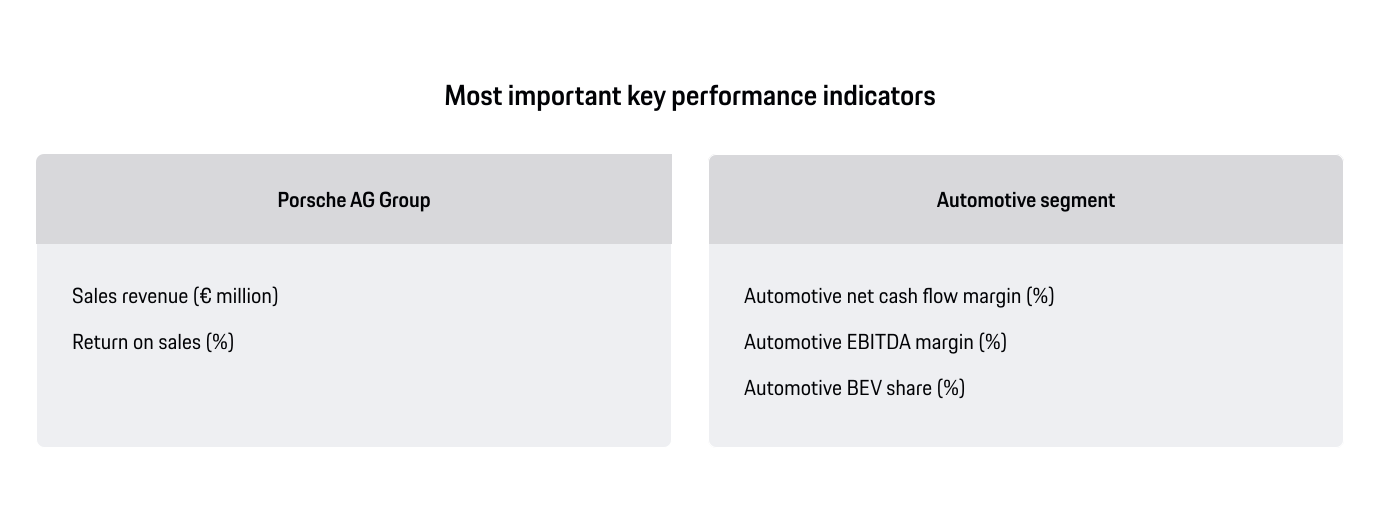
Based on the group strategy, this section describes how the Porsche AG Group is managed and which key figures are primarily used. The operating performance and the related success of the Porsche AG Group are reflected in both the financial and non-financial key figures as an integral part of the internal management system. There were no changes in the management process or the most important performance indicators compared to the prior year.
Management process at the Porsche AG Group
At the Porsche AG Group, the continuous and close alignment of the group strategy with the strategic and operational planning ensures full transparency in the financial assessment and evaluation of decisions on the direction to be taken. As a key management element of the Porsche AG Group, the multi-year operational plan, which is prepared once a year and generally for a period of five planning years, is derived from a strategic plan for the next ten years and approved by the Executive Board and the Supervisory Board. The multi-year operational planning serves to assess prerequisites for realizing the strategic projects as well as formulating and safeguarding the group’s targets, both technically and financially. It is on this basis that all corporate areas are coordinated regarding the strategic projects, functions/processes, products and markets.
For the future orientation of the Porsche AG Group, the individual planning content is determined on the basis of the planning horizon:
- the cycle plan/product strategy and thus the product range as the long-term strategic determinant of the vehicle business and other mobility-related services,
- long-term sales planning that shows market and segment developments and is used to determine the delivery volume for the Porsche AG Group and
- capacity and utilization planning for the individual factories.
As a final step in the multi-year operational planning, the aligned results of the upstream planning processes flow into the financial planning. For this purpose, the financial planning of the Porsche AG Group, including the segments and business fields, consists of the income statement, the financial and balance sheet planning, the profitability and liquidity planning as well as the investments as a prerequisite for the future product alternatives and alternative courses of action. The multi-year operational planning is then used to derive the binding targets/target recommendations for the first planning year, details of which are then finalized down to the level of the operational cost centers and group companies in the budget planning for the individual months.
During the year, the budget is reviewed each month to determine the degree of target achievement. In this regard, target/actual and prior-year comparisons, variance analyses and–if required–action plans are key instruments for corporate management to ensure that the budgeted targets are reached. For the current fiscal year, regular rolling forecasts are performed focusing on the next three months, the following quarters and the year as a whole, and are backed up as needed by more extensively detailed forecasts and, if necessary, adjusted to reflect the latest developments. Current risks and opportunities are also taken into account when preparing the forecast to the extent that their occurrence is considered to be probable. The management process can thus ensure short-term adjustments and the initiation of implementation programs to secure the forecast, also taking volatile conditions into account. In principle, the focus of management during the year is on aligning current activities with requirements. Moreover, each current forecast provides the starting point for the upcoming multi-year operational plan/the budget planning for the following fiscal year.