Report on risks and opportunities

General principles of risk and opportunity management

Promptly identifying the risks and opportunities arising from operating activities and taking a forward-looking approach to managing them is crucial to the long-term success of the Porsche AG Group. A responsible approach in dealing with corporate risks to achieve our objectives is just as important as duly identifying opportunities as a way of ensuring competitiveness. For this purpose, the Porsche AG Group has management systems in place that are embedded in a comprehensive risk and opportunities management system.


The Porsche AG Group has implemented a comprehensive Risk Management System (RMS). This system is designed to identify and appropriately manage risks with respect to the achievement of strategic and operational goals as well as complying with legal and internal requirements. This is intended to avert the threat of loss for the Porsche AG Group and to identify at an early stage any threat of any risks that might jeopardize its continued existence.


As part of its opportunity management, the Porsche AG Group identifies and implements short, medium and long-term opportunities by systematically determining, assessing and operationalizing them and ultimately converting them into measurable revenue, cost and liquidity potential.


Identified risks and opportunities are already discussed in the report on expected developments, to the extent that their occurrence is considered to be probable. The following explanations about risks and opportunities include potential future developments or events that may lead to a positive (opportunity) or negative (risk) deviation from the forecast for the Porsche AG Group.


Regular reporting on risk management is intended to support the Executive Board of Porsche AG in the timely identification of risks, particularly those that could lead to developments that jeopardize the continued existence of the company.


The RMS and the implementation of and adherence to the defined baseline standards in the operational areas is monitored on an ongoing basis by the Porsche AG Group’s Internal Audit department.


Below, the report first describes the changes in methodology related to the risk management system in the current fiscal year as well as the risk strategy of the Porsche AG Group, then it takes a closer look at how the risk/opportunity management system functions and finally explains the specific Risk and opportunity situation as of December 31, 2025.

Changes in methodology related to the risk management system

Changes were made to the Porsche AG Group’s RMS in the reporting year 2025. These changes relate exclusively to the risk categorization system. While there were six separate risk categories in the prior year – sales risks, supply risks, financial risks, personnel risks, operational risks and strategic risks – the structure was specified more precisely in the current fiscal year and adapted according to the importance of each topic.


Development and technology risks were introduced as a separate risk category in order to provide a differentiated view and reporting of the risk situation in the development and technology environment. In the prior year, the risks in these areas were mainly allocated to the two risk categories sales risks and supply risks. In addition, personnel, organizational and legal risks are combined in a joint category in order to increase the clarity of reporting.


The previous risk categories “Operational risks” and “Strategic risks” are no longer separate risk categories. Instead, they now serve as dimensions that are assigned to each identified risk: Specific risks within the RMS period under review (current fiscal year and three subsequent years) are assigned to the “operational” dimension, while long-term corporate risks that extend beyond the RMS period under review are assigned to the “strategic” dimension.


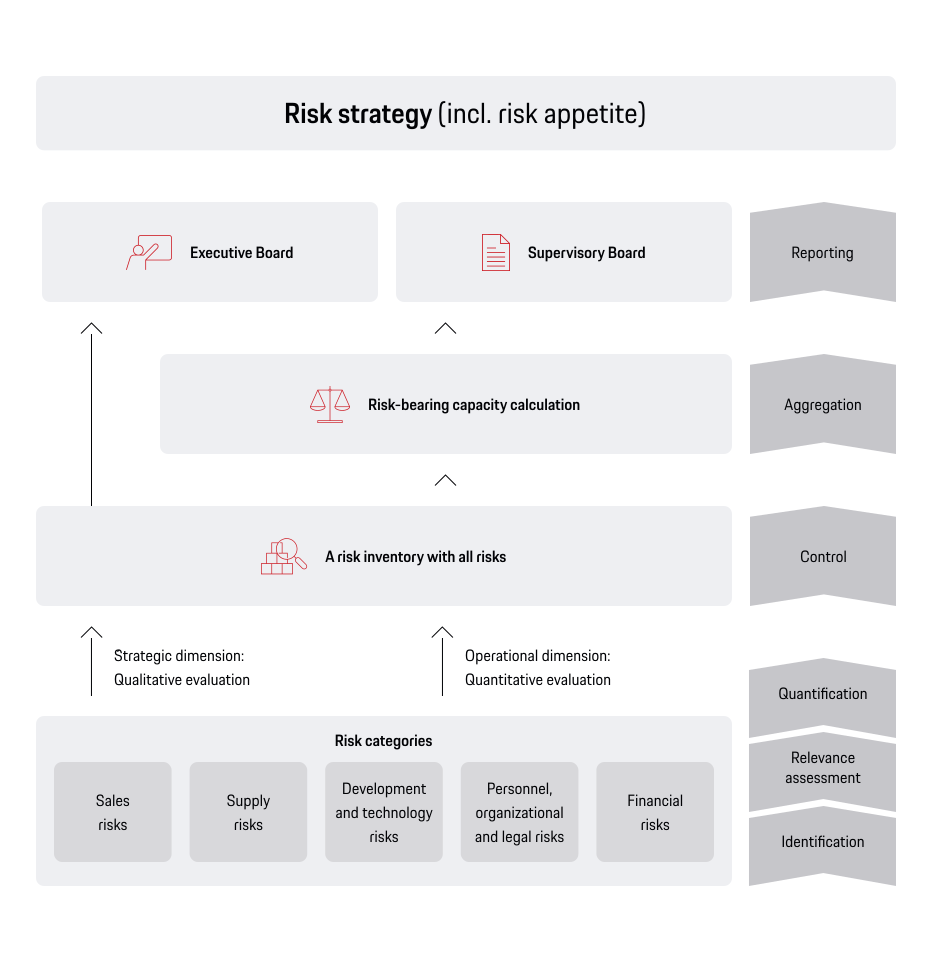
The adjustments described above mean there are now five risk categories in the Porsche AG Group:

  • Sales risks
  • Supply risks
  • Development and technology risks
  • Personnel, organizational and legal risks
  • Financial risks


How each individual risk is allocated to the adjusted risk category is presented in the Risk and opportunity situation as of December 31, 2025 of the Porsche AG Group. The basis for reporting has not changed since the prior year, ensuring that the results are still comparable. All relevant quantified risks identified within the RMS period under review are included in the reporting, i.e., risks with a financial net potential in a worst-case scenario of at least €100 million. This indicates the maximum possible impact of the risk, taking into account any risk control measures. These are the risks associated with the “operational” dimension.


No changes were made to the methodology for opportunity management in the reporting year 2025 compared to the prior year.

Risk strategy

Risk strategy of the Porsche AG Group
Risk assessment

The term risk is defined as the possibility of a negative deviation from a budgeted figure or target. A net view is generally taken here. This means that risks are assessed taking risk management measures into account. The Porsche AG Group’s RMS is made up of several integrated and interrelated elements and comprises risk categories relevant to the Porsche AG Group. They are derived from the business model and are used to classify individual risks according to their causes. They form the risk inventory of the Porsche AG Group.


Within each risk category, individual risks are assigned to either the “operational” or “strategic” dimension. Specific risks within the RMS period under review, which corresponds to the current fiscal year and the three subsequent years, are in the “operational” dimension. The specific risks can be assessed on a quantitative basis. Risks from the sustainability environment are also integrated into these processes. Quantification involves determining the financial impact of the risks within the RMS period under review. These risks form the basis for determining the risk-bearing capacity and reflect the current risk situation of the Porsche AG Group, which is included in the reporting to the Executive Board and Supervisory Board.


The Risk and opportunity situation as of December 31, 2025 presents the risks of the Porsche AG Group that have been identified and quantified as material within the RMS period under review. Risks with a potential net worst-case financial impact greater than or equal to €100 million are considered material. This indicates the maximum possible impact of the risk, taking into account any risk control measures.


Risks in the “strategic” dimension are long-term corporate risks that may impair the Porsche AG Group’s ability to achieve its long-term corporate goals. Due to their long-term nature, they are always assessed qualitatively and reported annually to the Executive Board and Supervisory Board of Porsche AG. The early identification of strategic risks and the implementation of effective control measures aim to strengthen the resilience of the Porsche AG Group. Long-term sustainability-related aspects are also considered part of strategic risk management. These risks form the framework for the risk and opportunity situation and are presented in the introductory section of the report on the basis of overarching risk areas. Risk and opportunity situation as of December 31, 2025 If issues materialize in the context of long-term corporate risks and risks arise within the RMS period under review, these are included in the “operational” dimension in the relevant risk category and assessed quantitatively if they are material. These risks are included in the Porsche AG Group’s risk-bearing capacity calculation and are taken into account in the current risk and opportunity situation within the relevant risk category.
Risk management

The risk categories are set down in the risk strategy. In addition, the risk strategy also includes four overarching pillars of managing risks.

  • Risk acceptance: The risk is accepted as identified.
  • Risk avoidance: The risk-causing situation is not entered into in order to exclude the risk.
  • Risk reduction: The probability and/or impact of the risk is reduced.
  • Risk transfer: The risk is transferred to another company.

Risk aggregation and risk-bearing capacity

Risks can lead, both individually, but primarily when acting together in an unfavorable manner, to a situation that could jeopardize the company’s ability to continue as a going concern. To ensure that the interplay of individual risks is adequately taken into account, central risk management aggregates the relevant quantified individual risks, i.e., risks with potential net worst-case financial impact greater than or equal to €100 million, into an overarching overall risk, which is compared with the current risk coverage potential. The overall risk is calculated using the value-at-risk at a confidence level of 99% for the RMS period under review. Risks with a financial net potential in a worst-case scenario below the €100 million threshold are included in the overall risk situation as a lump sum. Risk aggregation is carried out using IT-supported simulations (Monte Carlo simulation).


The RMS’s risk-bearing capacity concept is based on the perspectives of over-indebtedness and insolvency. The overall risk is evaluated in relation to its potential negative impact on the operating result (EBIT) and cash flow. This is then compared with the current risk coverage potential: Potential losses in operating profit (EBIT) are compared with equity, and the potential negative cash flows are compared with available liquidity. The automotive and financial services segments are considered separately in order to determine the company’s specific risk-bearing capacity.


In order to ensure that developments jeopardizing the Porsche AG Group’s ability to continue as a going concern are recognized at an early stage, the risk-bearing capacity concept contains limits and the likelihood of these limits being exceeded is incorporated into the reporting to the Executive Board and Supervisory Board. The maximum tolerable amount of the overall risk can be derived using these limits (risk appetite).

Structures and procedures

Risk management system

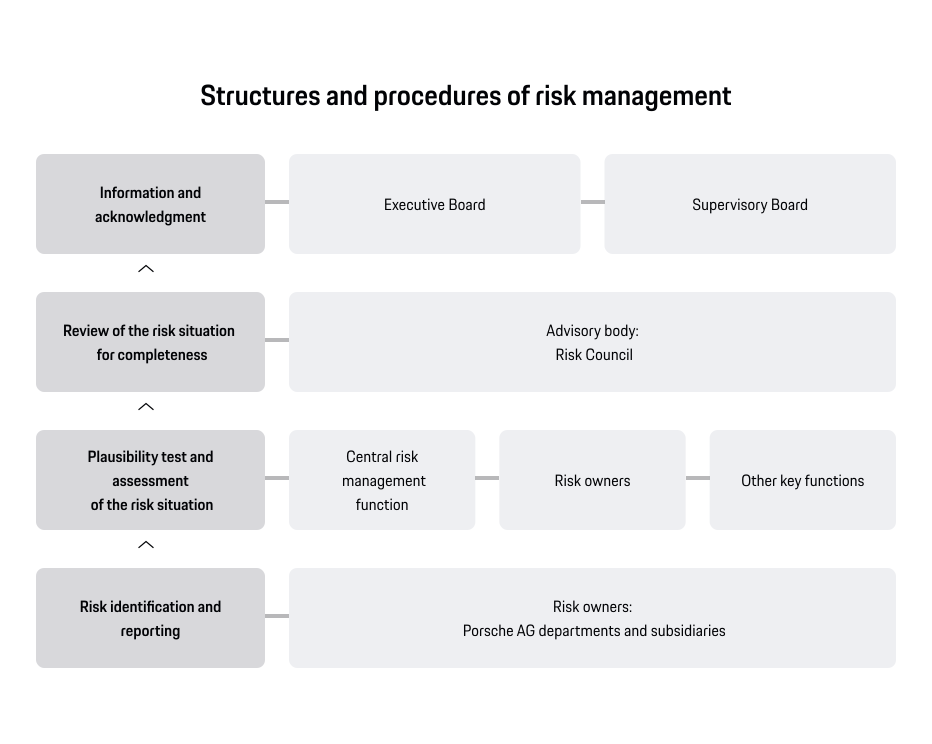
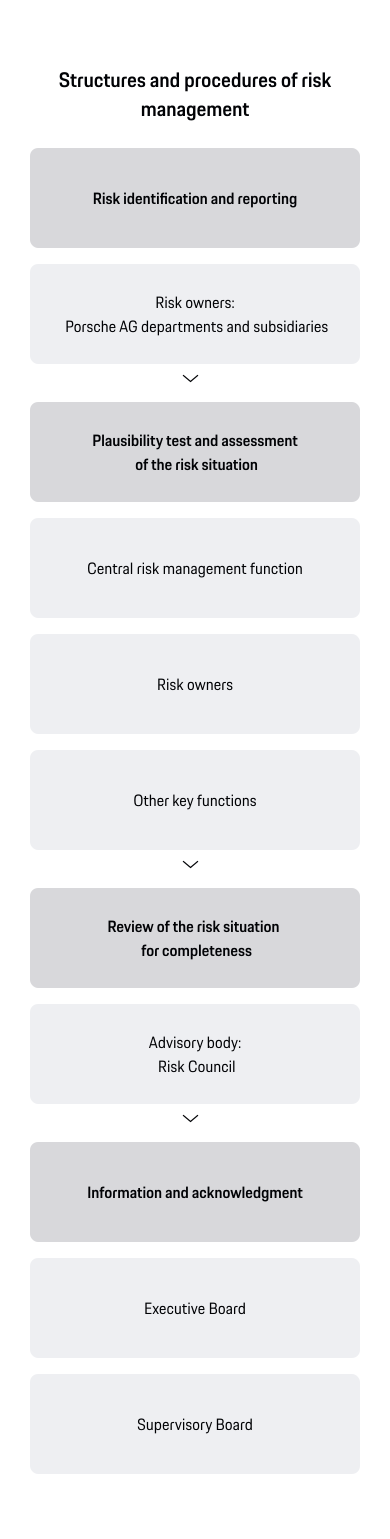
The Porsche AG Group’s risk management is organized along decentralized lines. Alongside the central risk management function as a method and reporting center, each main department of Porsche AG and each subsidiary linked to risk management is represented by risk managers who are responsible for managing the implementation of and adherence to baseline standards, which comprise, for example, the uniform identification, assessment and documentation of risks and defined reporting processes. The decentralized organizational structure is designed to emphasize the importance of risk management in the local operating units and ensure risks are identified and managed effectively.


The basis of consolidation of the RMS is based on that of the Porsche AG Group. If it makes sense from a risk perspective, the basis of consolidation can be reduced for risk management purposes by removing individual subsidiaries. The basis of consolidation was adjusted accordingly for risk management purposes and primarily reduced by removing second-tier subsidiaries and holding companies.


In line with the decentralized organizational structure, risks are identified and recorded in the risk management IT tool by the departments of Porsche AG and those subsidiaries linked to risk management as the risk owners.


As part of the risk report, the risk owners provide control measures and an assessment of the financial net potential of the risk in a worst-case scenario. The financial net potential in a worst-case scenario indicates the greatest possible financial impact over the entire term of the risk for the Porsche AG Group, taking into account financial losses from reputational risks and legal consequences. All risk management elements already in place are taken into account. Bandwidths are defined within fixed risk classes to classify the financial net potential in a worst-case scenario.


The risks are checked for plausibility and assessed together in the next step by central risk management, the risk owners and other key functions. The main risks are quantified if they are assigned to the “operational” dimension. Central risk management coordinates with the risk owner and other key functions in order to take the necessary information into account in the stochastic risk modeling.


Stochastic risk modeling uses appropriate probability distributions (e.g., equal distribution, triangular distribution, etc.) and IT-supported simulation methods (Monte Carlo simulation). As part of the risk simulation, the expected value of the financial loss and the value at risk at a confidence level of 99% are determined for the RMS period under review.


On a quarterly basis the relevant quantified risks are reviewed by the Risk Council for completeness. The Risk Council is an advisory body tasked with reviewing baseline standards for instruments and methods of the RMS and the associated reporting system. The risk situation and the overall risk are reported to the Executive Board and Supervisory Board on a quarterly basis.


A core element of risk management of the Porsche AG Group is that risks can be reported and updated without delay via the group-wide reporting channels that have been set up. Outside of the standard process, there is an event-based reporting process for risks of the utmost urgency.


A risk requiring urgency is deemed as such if the financial net potential in a worst-case scenario over the entire term of the risk is greater than €1 billion for Porsche AG or €100 million for subsidiaries and the probability of occurrence exceeds 50% in the next two years.


The Porsche AG Group has ensured the level of qualification and extensive training of employees involved in the risk management process. In addition to mandatory training courses, voluntary training courses are also offered to employees who want to update their specialist knowledge. Central risk management monitors the progress of training and the level of coverage on an ongoing basis and reports this on an annual basis to the Risk Council.


For the documentation of the group-wide RMS and exercising the monitoring function, there is an IT system that reflects all of the risk management processes. It supports the employees involved in the risk management process in executing risk management processes and compliance with baseline standards defined in risk management. In addition, central risk management supports the employees involved in all phases of the process.

Internal control system

The Porsche AG Group’s Internal Control System (ICS), which is a key element of the RMS, comprises processes, guidelines and mechanisms that safeguard and monitor operational processes, financial reporting and compliance with laws and (internal) regulations. As a central corporate management tool, it helps to increase the transparency of processes, ensure the necessary process stability and the clear assignment of responsibilities. Sustainability-related aspects are also taken into account. Monitoring is based on defined process risks, which are managed through recurring control activities.


The ICS consists of various sub-processes that build on each other in the form of a cycle. The defined process risks and control objectives are updated in annual test of design. The risk owners must ensure that the process risks and control objectives presented are fully and effectively covered by appropriate control activities.


This is followed by a review of the functionality of the controls in the annual test of effectiveness. The scope of the test of effectiveness is determined on the basis of various risk-oriented criteria.


In a final step, an annual report on the appropriateness and effectiveness of the ICS is submitted to the Executive Board and Supervisory Board of Porsche AG. In addition, regular reports are submitted to the Risk Council on the current implementation status of the weaknesses identified in the test of effectiveness.

Monitoring of the effectiveness of risk management, the internal control system and the compliance management system

To ensure the effectiveness of the RMS and the ICS, optimization needs are identified and implemented as part of the continuous monitoring and improvement processes. Internal and external requirements are taken into consideration equally. This also applies to Porsche AG’s compliance management system in accordance with the compliance management guideline, which aims to ensure compliance with the relevant legal provisions and regulations considered there and is continuously monitored and enhanced in a risk-oriented manner, taking into account internal and external requirements.


The results of the continuous monitoring and improvement process of the RMS/ICS are reported annually to the Executive Board and the Supervisory Board of Porsche AG.


There is also quarterly reporting on the risk situation and annual reporting on the results of the test of operating effectiveness of the ICS to the Executive Board and the Supervisory Board of Porsche AG. There is regular and event-related reporting on Porsche AG’s compliance management system to the Executive Board and Supervisory Board.


Based on this reporting content, the Executive Board and Supervisory Board of Porsche AG are not aware of any indications of the Porsche AG’s RMS/ICS or compliance management system not having been appropriate or effective as a whole in the fiscal year 2025.


Irrespective of this, there are inherent limitations of the effectiveness of every control and risk management system or compliance management system. For example, even a system that is deemed appropriate and effective cannot ensure that all risks that actually arise or legal violations are identified beforehand nor can the possibility of process disruptions be completely ruled out.

Internal control and risk management system in the context of the group accounting process

The internal control and risk management system relating to accounting aims to minimize the risk of material misstatements in the consolidated financial statements and in external reporting.


The internal control system includes methods and principles as well as measures and controls derived therefrom, which aim to ensure the complete, timely, uniform and correct recording and transmission of the relevant information for the annual and consolidated financial statements and the combined management report of Porsche AG.

The Porsche AG Group’s accounting is generally organized along decentralized lines. Accounting duties are largely performed independently by the consolidated subsidiaries. The Volkswagen Group’s IFRS Accounting Manual is used to ensure the application of uniform accounting policies. In addition, the Porsche AG Group specifies these provisions with instructions for the quarterly and annual financial statements as well as further reporting rules.


A central element of the internal control system is regular risk analysis and assessment in order to identify and manage significant risks to the accounting and financial reporting processes in the legal entities of the Porsche AG Group and central functions at an early stage. The group companies included are identified in a quantitative and risk-oriented process. The subsequent definition and implementation of controls as well as their execution and documentation are carried out uniformly in accordance with group-wide guidelines. The control system contains preventive and detective controls and is integrated into accounting-related processes at the respective group functions and companies.


Alongside plausibility and consistency checks, other elements of the internal control system applied during the preparation of the annual and consolidated financial statements of Porsche AG include the clear delineation of areas of responsibility and the application of the principle of dual control. Further control activities at group level include analyzing and, if necessary, adjusting the data reported in the financial statements presented by the subsidiaries and the consolidation measures carried out. Furthermore, the Porsche AG Group uses data analyses to identify and eliminate any process and control weaknesses.


The effectiveness of the internal control system is systematically assessed using standardized procedures. Regular tests based on samples are performed. This forms the basis of the assessment of whether the controls are appropriately designed and effective.

If weaknesses are identified in the course of process-integrated controls or effectiveness tests, the Porsche AG Group takes mitigating measures to eliminate the weaknesses.

The standards of the accounting-related internal control system are defined uniformly throughout the group and continuously enhanced. At the end of the annual cycle, the relevant group companies confirm that the group-wide guidelines have been implemented. The results from the accounting-related ICS are reported to the Executive Board and Supervisory Board of Porsche AG.


Based on the controls, effectiveness tests and mitigating measures carried out for the fiscal year 2025, Porsche AG considers the accounting-related internal control and risk management system to be appropriate and effective.

Opportunity management

In a dynamic market environment, it is not only important to manage risks effectively when making business decisions, but also to identify and realize opportunities consistently and in the best possible way.

Opportunities management is closely based on strategic targets and is an integral component of the operational structures and procedures in conjunction with the general planning and management processes in the Porsche AG Group. This includes optimizing revenue and costs as well as improving products, mobility and financial services. For this purpose, the Porsche AG Group is constantly analyzing the environment of its business model in order to identify trends (e.g., from the market, technology, society and environment) as well as changes in key factors at an early stage. With the help of scenario analyses – involving strategic business planning, the affected business divisions and Controlling – the developments relevant for the business model are considered and assessed so as to derive any potential effects for the Porsche AG Group.

The business divisions use this to derive short, medium- and long-term opportunity potential and operationalize this potential accordingly. In addition to the systematic implementation of its strategy, the Porsche AG Group aims to secure its long-term competitiveness and future viability through further efficiency and opportunity initiatives. The identification of specific targets from the aforementioned initiatives offer additional potential to generate opportunities.


The Porsche AG Group is managed by targets and opportunities with a clear focus on a sustainable increase in the value of the company.

Risk and opportunity situation as of December 31, 2025

In principle, the risk categories that have already been presented and which will be examined in more detail below also hold opportunities. Such opportunities may arise for the Porsche AG Group if the actual effects are better than the underlying planning assumptions or anticipated forecasts, or if additional positive effects can or do arise in the aforementioned categories–in relation to the value chain.


The macroeconomic conditions and the long-term corporate risks of the Porsche AG Group form the key framework conditions for the risks and opportunities listed in the categories below. These are included as assumptions in their assessment and are presented below, before the specific risk and opportunity situation within the respective risk categories is reported on further down.


The macroeconomic conditions are characterized by extraordinary uncertainties. Trade and geopolitical tensions, increasing protectionist tendencies and environmental challenges are impacting the global economy to varying degrees. On top of this, high levels of debt in the private and public sectors are clouding growth prospects, as is demographic change, which is has the potential to hamper growth. Volatile financial markets, increased exchange rate risks, fluctuating energy and commodity prices and a declining yet still high inflation rate in conjunction with a restrictive monetary policy are leading to persistently high interest rates and a weaker economic output overall.

From a strategic risk management perspective, risks of particular significance for the long-term direction of the Porsche AG Group were identified against the backdrop of the macroeconomic conditions and other relevant influencing factors. These risks can be grouped into overarching risk areas that reflect the company’s key strategic challenges.

One of the main strategic risks here is ensuring a competitive product development and cost structure in light of accelerated technological developments. Delays or outdated product developments can significantly impair the innovative strength and long-term competitiveness of the Porsche AG Group. A clear strategic direction is also crucial in order to avoid inconsistent decisions and risks to long-term competitiveness.

Geopolitical and economic instabilities also pose a considerable challenge. Interstate conflicts, supply and logistics bottlenecks caused by geopolitical measures and economic policy interventions with a geostrategic background in an increasingly complex and regulated corporate and product environment can have a significant impact on sales markets and supply chains. In addition, there are risks in the global value chain that jeopardize the security of supply through dependencies and potential disruptions.

Furthermore, changes in customer behavior, intense competition and disruptive business models require continuous further development of the brand and a consistent focus on customer needs. Otherwise, there is a risk of the brand strength and market position of the Porsche AG Group being impaired.

In addition to offering considerable opportunities, increasing digitalization also entails risks. These include threats to IT security from cyber attacks as well as complexity and possible delays in the implementation of transformation projects. Failed digitalization initiatives or security incidents can have a significant impact on the efficiency, stability of business operations and competitiveness of the company.

Furthermore, securing skilled workers and further developing a sustainable corporate culture are crucial to the innovative strength and performance of the Porsche AG Group. The risk of a shortage of skilled workers, potential deficits in skills and motivation in the workforce and a corporate culture that is not sufficiently agile can jeopardize the implementation of strategic goals and weaken the company’s competitiveness in the long term.

Finally, climate change, resource consumption and stricter regulatory requirements are increasing the pressure to consistently implement sustainability strategies in order to safeguard cost structures and ensure the long-term performance of the Porsche AG Group.

Risk mitigation involves identifying and implementing targeted measures in order to sustainably strengthen the Porsche AG Group’s resilience to external and internal influences and ensure its long-term competitiveness.

The specific material risks in the “operational” dimension by risk category for the Porsche AG Group as of December 31, 2025 are presented below. Based on the expected value within the RMS period under review, the significant risks are aggregated by category and classified as “low”, “medium” or “high” for the Porsche AG Group. The table below shows the classification of the aggregated risks in the respective categories based on the limits shown. Any changes in risk classification compared to the prior year are also indicated.

Overview of risks in the Porsche AG Group1

Risk categories

Classification of the level of risk
Change on prior year

Sales risks

Sales risks


Trade barriers

Trade barriers

High

Unchanged

Market development

Market development

High

Unchanged

Supply risks

Supply risks


Purchasing, quality and logistics2

Purchasing, quality and logistics2

High

Unchanged

Geopolitics

Geopolitics

High

Unchanged

Development and technology risks

Development and technology risks


Technology selection and maturity

Technology selection and maturity

Low

Reduced

Development costs and resources

Development costs and resources

Low

3

Personnel, organizational and legal risks

Personnel, organizational and legal risks

Personnel

Personnel

Low

3

Production and operations

Production and operations

 Low

 –3

Information technology

Information technology

Low

Reduced

Regulatory environment

Regulatory environment

Medium

Reduced

Litigation

Litigation

Low

Unchanged

Taxes

Taxes

Low

Unchanged

Financial risks

Financial risks

Currencies

Currencies

High

Increased

Commodities

Commodities

Low

Unchanged

Interest rates

Interest rates

Low

Unchanged

Other financial risks

Other financial risks

Low

Unchanged

1  As of December 31, 2025, the Porsche AG Group differentiates between five risk categories. Changes in methodology related to the risk management system

In order to be able to compare the results, the risks quantified in the prior year were transferred to the new risk categories. The changes presented are based on developments in content and not on changes in methodology.

2  As of December 31, 2025, only the name of the “Purchasing, quality and logistics” sub-category has been adjusted.

3  As of December 31, 2024, there were no material risks in the subcategory presented.

The classification of the level of risk in the risk categories is based on the following limits:

Classification
Risk level

Low

≤ €500 million

Medium

> €500 million – €1 billion

High

> €1 billion

Sales risks and opportunities

Trade barriers

The Porsche AG Group is exposed to relevant risks in connection with trade barriers. This concerns both tariff trade barriers in the form of customs duties and non-tariff trade barriers, such as regulatory measures to protect domestic producers or the restriction of international trade. The risks in this context are below the prior-year level, but are still considered to be “high”.


Based on the free trade agreements that the EU has concluded with various countries, Porsche vehicles can be imported to these countries at reduced rates of customs duties or duty-free, subject to compliance with the local content requirements. New and more stringent local content requirements necessitate an ongoing adjustment of the calculation processes. If local content requirements are not met, there is a risk for the Porsche AG Group that the standard rate of customs duty will have to be applied when importing vehicles.


The risk of the USA increasing import tariffs remains a possibility. After adjustments were made to the US import tariff regulations in the reporting year, the US tariff risk was reduced compared to the prior year due to the rapprochement achieved between the EU Commission and the US government. However, the US tariff risk remains relevant in view of possible changes being made to trade policy and punitive tariffs being imposed. To counter this risk, the Porsche AG Group has developed preparatory measures, including those relating to pricing and product policy, that enable it to react to any changes quickly and in a targeted manner.


Against the backdrop of a volatile trade policy environment, there are also sales risks in Canada that could be influenced by the macroeconomic implications of a changing tariff environment, particularly as a result of potential increases in US tariffs.


There are also further sales risks as a result of the ongoing trade conflict between Europe, the USA and China. Import restrictions in the US market in the form of potential bans on the use of certain foreign components and software solutions are of particular importance to the Porsche AG Group. As a result, adjustments may be necessary in the supply chain. The Porsche AG Group monitors local developments in the US market on an ongoing basis and takes appropriate preventive measures to reduce the impact on business activities. Although the risk has been reduced compared to the prior year as a result of ongoing risk mitigation, it is still material.


In the context of increasing trade barriers, laws governing export controls, in China for example, also play an important role for the Porsche AG Group. This means that components and materials from abroad that are subject to certain export control laws cannot be exported, or can only be exported with restrictions. This may affect significant business transactions and have a negative impact on the sales and reputation of the Porsche AG Group. Developments in this context are monitored and evaluated on an ongoing basis.


Changes in trade policy frameworks may also give rise to positive earnings effects for the Porsche AG Group. Potential for lower cost of goods sold or also the possibility to offer products and services at lower prices is offered by a possible removal of tariff barriers, import restrictions or a reduction of direct excise duties.

Market development

Within the “Sales risks and opportunities” category, the risks for the Porsche AG Group in connection with market development are classified as “high”, as in the prior year.


The Porsche AG Group continues to face the risk of a further decline in demand in China, which is experiencing a downward market trend in the luxury segment. In addition, the increasing intensity of competition, localization efforts and structural changes in the automotive sector continue to be noticeable in the Chinese market. These risks may continue to have an impact on sales expectations in the Chinese market. The market situation in China is constantly monitored and taken into account in sales planning. As a result of the sales risk materializing in China in the fiscal year 2025 as well as sales planning that has been aligned and adjusted to the market, the risk of sales within the RMS period under review has been reduced compared to the prior year.


The strategic realignment of the Porsche AG Group’s product strategy decided on in the reporting year included aligning the product portfolio with the market. The Porsche AG Group is committed to a flexible product portfolio that integrates high-performance combustion engines, plug-in hybrids and electromobility. This strategic realignment lowers the risks in connection with the delayed transformation of the sales markets toward electromobility compared to the prior year.


Despite the reduced risk situation, there are still sales and cost risks in connection with ongoing product developments and the electrification strategy in the transformation of the sales markets toward electromobility. These risks could arise if development projects are no longer considered economically viable due to changed market conditions. Furthermore, the Porsche AG Group is exposed to risks in connection with restrained market acceptance and possible deviations from customer requirements. The volatile development of the global political framework conditions and requirements in this context, such as the reduction or elimination of government subsidies for electric vehicles or even registrations for combustion models potentially being prohibited, may also affect expectations in the Porsche AG Group’s sales markets. There are also challenges in the area of the fast-charging infrastructure required for electromobility. An insufficiently developed charging infrastructure can lead to a potential loss of all-electric vehicle sales.


In the current fiscal year, the development and technology risks in connection with the transformation toward electromobility are presented in the “Development and technology risks and opportunities” category. Development and technology risks and opportunities


If, contrary to expectations, the sales situation develops more positively, this may also create opportunities for additional earnings potential. This should be seen in particular against the backdrop of a balanced regional distribution, with an increased focus on Overseas and Emerging Markets.


In addition, the expansion of market shares due to a broad and young product portfolio of various drive technologies and the growth of existing business fields could have a positive impact. Moreover, the strength of the brand in conjunction with innovation can also support the realization of unit prices and the associated earnings potential.

Supply risks and opportunities

Purchasing, quality and logistics

In the Porsche AG Group, the supply risks within the “Purchasing, quality and logistics” sub-category are still classified as “high”.


There are risks associated with the start of production of vehicles being scaled-back, delayed or postponed due to quality or scheduling problems in the supply chain. Existing vehicle models are also exposed to significant risks in this context, which arise in particular from the increasing economic pressure on suppliers as a result of the general economic trend and increasing competition, for example, from China. The increasing pressure within the supplier industry may lead to potential insolvencies or liquidity bottlenecks at suppliers, which could have a negative impact on the Porsche AG Group’s production processes and thus on supply chain stability. This risk is exacerbated in particular by the increased dependencies in the supply chain. In addition, possible recalls due to quality problems in the supply chain could have a negative impact on the Porsche AG Group and lead to cost and sales risks. By closely monitoring the supplier relationship, the necessary risk management measures can be initiated at an early stage.


There are also significant risks due to business interruptions caused by climate hazards in the supply chain. Climate change means that extreme weather events are occurring more and more frequently, which can affect the operations of suppliers to the Porsche AG Group. These interruptions to operations may result in delivery delays or lost production or in increased operating costs for the Porsche AG Group. To manage this risk, suppliers are proactively analyzed for physical climate risks and safeguarding strategies are defined with the suppliers.


Significant risks may also arise from the provision of software for products and connectivity services for the Porsche AG Group. A potential risk is the timely provision of the software in the required quality. Competitive disadvantages are conceivable if demand requirements are not met as a result of quality problems.


In addition to the dependencies in the supply chain mentioned in the software environment, risks in connection with development and technology, particularly with regard to the selection and maturity of software components and platforms, are now presented in the category “Development and technology risks and opportunities.” The risks relating to battery cell and battery module production mentioned in the prior year are now also included in this category. These are risks that relate to the phase before the start of production (SOP). Development and technology risks and opportunities


The Porsche AG Group also faces increased risks due to dependencies in the supply chain, particularly in the region China. This could increasingly affect the availability of materials, for example, in the area of batteries and rare earths. The Porsche AG Group is continuously working on measures to further safeguard the supply chain. The supply situation is monitored on an ongoing basis and preventive measures, such as setting up component banking, are introduced to safeguard supplies.


The increased dependency on the region China has become noticeable for the Porsche AG Group in the current fiscal year, particularly in the area of semiconductor supply. Geopolitical tensions and trade restrictions could affect the availability of materials and supply chain stability. Current developments show that the existing dependencies in the semiconductor sector continue to represent a structural risk component. Potential risks for the Porsche AG Group could manifest themselves in the form of production interruptions and thus also lost sales. The potential impact of bottlenecks can be mitigated, for example, by longer lead times in planning and procurement or by concluding long-term contracts. Such a comprehensive concept to safeguard supplies has a positive effect on supply chain stability.


In addition, additional cost demands from suppliers for various reasons may lead to cost risks in respect of investments and direct material costs. Such causes result in particular from structural adjustments within the industry. Individual suppliers can claim additional costs if they find themselves having to adapt their cost structures to changing conditions. Consistent monitoring on a project basis and early countermeasures, such as engaging in negotiations during the procurement process, significantly reduce risk.


Opportunities could in principle arise should, contrary to current estimates, the supply situation and its repercussions develop more positively or things return to normal earlier than anticipated.


Significant opportunities may also arise from potential additional synergies with new vehicle architectures within the Porsche AG Group as well as from technological innovations and collaboration with the Volkswagen AG Group. These synergy and innovation effects pertain to Development, Procurement and Production in particular. Furthermore, opportunities from product cost and process optimization program can contribute to the realization of earnings potential in this context.


The Porsche AG Group has also identified a material opportunity in the circular economy. Remanufacturing parts and components and recovering key raw materials such as nickel, cobalt, lithium and manganese from high-voltage batteries can provide financial advantages for the Porsche AG Group. Closing raw material cycles makes the Porsche AG Group less dependent on volatile commodity markets and can thus reduce risks arising from geopolitical instability in relation to the availability of raw materials.

Geopolitics

Possible risks related to geopolitical events may also increasingly arise from the ongoing trade conflict between China and the USA and tensions in Asia. The Porsche AG Group is faced with possible sales losses and a dependence on Asian suppliers or sub-suppliers in the affected regions. In addition, conflicting sanction laws may exacerbate the risk situation. Geopolitical developments in this context are monitored on an ongoing basis in order to initiate targeted risk management measures, such as setting up component banking, at an early stage.


The conflicts in the Middle East may have a direct and indirect negative impact on the business activities of the Porsche AG Group. This can also include temporary disruptions to important sea routes, which can have an impact on supply chains, for example. The Porsche AG Group has implemented preventive risk management measures, such as safeguarding alternative logistics routes.


Due to the continuing tense geopolitical environment, the risks in this context for the Porsche AG Group continue to be classified as “high”.


If, contrary to previous planning and forecast assumptions, the geopolitical tensions in the aforementioned regions weaken or dissipate, this could lead to the effects on the global economy – including falling inflation rates, further decreasing interest rates, but also the sales situation in general and the challenges in the relevant markets – have a positive impact and possibly even result in opportunities on the sales and cost side for the Porsche AG Group.

Development and technology risks and opportunities

Technology selection and maturity

In the prior year, the risks associated with battery cell and battery module development as well as the selection and maturity of software components and platforms were allocated to the categories “Supply risks and opportunities” and “Sales risks and opportunities.” In the current fiscal year, risks relating to the phase before the SOP are allocated to the risk category “Development and technology risks and opportunities”.


In the area of battery cell and battery module development, the Porsche AG Group faces risks in connection with the degree of maturity. These include, in particular, the complexity and stability of the production processes, the service life and performance of the battery cells and compliance with dynamic technical and regulatory requirements. Unstable or not yet fully developed production technologies at suppliers can impair the quality and availability of components, which can result in deadline, quality and cost risks. In addition, delays in the deployment of new electromobility technologies may have a negative impact on the competitiveness of the Porsche AG Group. As part of the strategic realignment of the Porsche AG Group in the fiscal year 2025 and the market-oriented adjustment of the product portfolio, the planned platforms for electric vehicles have been rescheduled. Consequently, risks in the area of battery cell and battery module development are no longer classified as material within the RMS period under review.


Risks also arise from the selection and maturity of software components and platforms. Delays in important development decisions can occur when new components are introduced or existing systems and platforms are adapted. As a result, project milestones are missed or delayed, which may impact vehicle launch schedules. At the same time, it must be ensured that open source software in used in a way that is compliant with the license. Non-compliance can cause additional legal and technical risks, delays in the development and integration of systems into vehicle projects and ultimately lead to increased costs. By systematically identifying technological weaknesses at an early stage and closely monitoring development processes and supplier relationships, the Porsche AG Group manages the aforementioned risks and safeguards the vehicle launch in the best possible way.


The risks in the “Technology selection and maturity” for the Porsche AG Group are deemed to be “low” and have therefore decreased compared to the prior year.

Development costs and resources

The strategic realignment of the Porsche AG Group’s product strategy that was announced in the fiscal year 2025 will result in additional investments due, among other things, to the development of the product portfolio. These are intended to increasingly strengthen the company’s competitiveness and contribute to its long-term earnings power and resilience. As a result, the Porsche AG Group faces cost risks in the area of research and development. An established monitoring system is used to continuously track R&D costs, identifying any deviations at an early stage and managing them with targeted measures. The risk situation in the “Development costs and resources” subcategory is assessed as “low” for the Porsche AG Group.

Personnel, organizational and legal risks and opportunities

The category “Personnel, organizational and legal risks and opportunities” combines the categories “Operational risks and opportunities” including the associated sub-categories and “Personnel risks and opportunities” considered in the prior year.

Personnel

Adjusting the corporate organization harbors the risk of valuable knowledge and expertise within the Porsche AG Group not being documented to a sufficient extent therefore being lost. This can have a negative impact on process efficiency, quality and stability of company processes. Established measures, particularly as part of transformation management and targeted activities for knowledge transfer and succession planning, proactively counteract the risk. The risk is deemed to be “low”.

Production and operations

The risk situation in the “Production and operations” sub-category, which includes potential disruptions in production and operational risks from daily business activities, is classified as “low”.


The Porsche AG Group is exposed to risks relating to possible interruptions to production at the plants due to disruptions caused by infrastructure. There are also risks relating to serious accidents when transporting vehicles by sea, for example, due to extreme weather events, technical defects or other external influences. In this context additional costs due to stricter regulations for the transportation of all-electric vehicles. Risks and the associated processes are continuously reviewed for risk management purposes and any potential for improvement identified is implemented in a targeted manner.

Information technology

In the Porsche AG Group, risks in connection with information technology also play a significant role in the area of business continuity management. The company’s business processes are heavily dependent on information technology, which represents a significant risk factor. There is a risk of default especially in production due to unforeseen events such as a cyber attack. The Porsche AG Group also faces the risk of potentially being exposed to data encryption or data protection risks. Critical IT resources and applications are safeguarded via the business continuity management system.


Due to ongoing measures in the area of information security, the risks have decreased compared to the prior year and are considered to be “low” on the basis of the expected value. However, this topic remains a significant risk factor and therefore a central component of group-wide risk monitoring because potential events could still have a significant impact in a worst-case scenario.

Regulatory environment

The Porsche AG Group is faced with strict safety requirements in an increasingly volatile global regulatory environment. These result, for example, from requirements for vehicle-related equipment features that must meet certain defined standards and may vary depending on the sales market.


There are also risks associated with specified emission standards, such as in China, non-compliance with which can lead to significant risks, for example, in the form of vehicle registrations potentially being prohibited.


Another material risk for the Porsche AG Group is the introduction or tightening of regulatory limits for CO₂ fleet emissions aimed at reducing fuel consumption and carbon emissions from passenger car fleets. For example, demand and the development of electromobility in the sales markets could cause CO₂ fleet emissions to deviate from the legal targets. Failure to meet these targets can lead to fines and reputational damage. There is also a risk of vehicles exceeding the set limits will not be allowed to be registered in the affected sales markets.


Furthermore, the Porsche AG Group continues to be subject to high regulatory requirements due to government regulations for the protection of human rights. This requires greater transparency in international supply chains. A potential breach of these regulations can even lead to bans on importing products that are suspected of violating human rights, either themselves or with regard to the parts they contain.


In addition, there are regulatory requirements for the sustainability of supply chains, particularly with regard to environmental due diligence. Here too, greater transparency is required along the entire value chain. Failure to comply with these obligations may result in official sanctions, fines and reputational damage.


Within the regulatory environment, this can lead to high costs in the Porsche AG Group for compliance for global requirements within the supply chain, procurement, product development, the production and sale of vehicles and their spare parts or to rising direct material costs. The necessary global legal monitoring is also complex and harbors the risk of non-compliance, fines and even possible loss of sales.


As a result of the ongoing risk mitigation and the consideration of possible negative effects during the Porsche AG Group’s forecast and planning assumptions, the risks in the “Regulatory environment” sub-category have decreased compared to the prior year and are classified as “medium”.


The Porsche AG Group meets the challenges of the complex regulatory environment by continuously carrying out comprehensive regulatory monitoring, implementing projects and measures to monitor international and country-specific standards and regulations and constantly reviewing their progress.


With regard to the regulatory environment, opportunities that could have a lasting positive impact on the Porsche AG Group’s results of operations may arise if the planning and forecast assumptions made develop more positively than assumed.

Litigation

The Porsche AG Group is involved in a large number of legal disputes and official proceedings as part of its national and international operating activities, which may result in significant risks. Among others, these legal disputes and proceedings relate to or are connected with employees, authorities, services, dealers, investors, customers or other contractual partners. As a result, financial obligations such as fines or claims for damages may arise and cost-intensive measures may be necessary. In this context, a specific assessment of the objectively likely consequences is often possible only to a very limited extent, if at all.


Compliance with legal requirements is another area in which risks may arise. This is particularly true in gray areas where the Porsche AG Group and the relevant public authorities may interpret the law differently. Further risks may arise from interactions with authorities, claims for infringement of intellectual property rights or criminal acts by individuals.


As in the prior year, the above-mentioned risks for the Porsche AG Group are assessed as “low”.


If the outcome of litigation is favorable to the Porsche AG Group, for example, due to a positive court decision, this could also result in opportunities for the earnings of the Porsche AG Group in terms of the provisions already recognized.


Further information can be found in the comments on litigation in the notes to the consolidated financial statements. Notes to the consolidated financial statements – 40. Litigation

Taxes

New requirements under tax law within Germany and abroad pose potential risks for the Porsche AG Group and require the constant adjustment of the relevant declaration processes. Risks of double taxation from the cross-border supply of intragroup goods and services are regularly reduced or eliminated using advanced pricing agreements or other bilateral procedures. Tax risks from tax field audits and their impact on the consolidated financial statements are closely monitored on an ongoing basis. Provisions or liabilities were recognized for potential future payments of tax arrears and for ancillary tax payments arising in this connection. These risks, which are assessed as “low” for the Porsche AG Group as in the prior year, are monitored and managed over the long term by systematically enhancing the Tax Compliance Management System (Tax CMS) that has been implemented.


Should the assessment of tax matters, for example, due to a change in a court decision, be favorable to the taxpayer and therefore advantageous for the Porsche AG Group, this may also result in opportunities for the earnings of the Porsche AG Group in terms of the provisions already recognized.

Financial risks and opportunities

Currencies

As an international organization, the Porsche AG Group conducts transactions in different currencies, which can give rise to currency risks. Material risks in the automotive segment result in particular from the fact that the Porsche AG Group mainly produces in eurozone countries, which means that the cost base is for the most part in euros. However, as an international automotive group, a large proportion of revenue from vehicle sales is generated in foreign currencies. These currency risks are partly hedged through the use of exchange rate hedging instruments for a period of up to five years. The annual hedge ratio decreases over the course of the RMS period under review. The main hedging instruments used are forward exchange transactions and currency options. The volume of exchange rate hedges is determined on the basis of the planned sales figures in the respective foreign currency, taking into account procurement volumes.


Due in particular to the devaluation of major foreign currencies, such as the US dollar and Chinese renminbi, the currency risks for the Porsche AG Group increased compared to the prior year and are now classified as “high”.

Commodities

There are also risks relating to raw materials in the automotive segment in respect of the development of prices, among other things. Possible risks from the development of prices of raw materials are analyzed on an ongoing basis in order to be able to act swiftly to any changes on the market. Commodity price risks for raw materials such as aluminum, copper, nickel, cobalt and lithium hydroxide are partially hedged through the use of hedging instruments for a period of several years. The annual hedge ratio decreases over the course of the RMS period under review. Averaging swaps are used as hedging instruments. The volume of hedges is determined on the basis of the planned commodity exposure in the respective procurement contracts. The Porsche AG Group still considers the risks in connection with the “commodities” sub-category to be “low”.

Interest rates

Within the Porsche AG Group, interest rate risks in the automotive segment result from changes in market interest rates, primarily for medium- and long-term interest-bearing receivables, liabilities and provisions. Variable interest items are included in cash flow hedges and some are hedged by means of interest rate swaps. As in the prior year, these interest rate risks are classified as “low”.

Other financial risks

Financial risks in connection with investing surplus liquidity and equity investment risks are included in other financial risks. The risks in this sub-category continue to be assessed as “low” in the Porsche AG Group in the current fiscal year.


With regard to the capital investment of surplus liquidity, there is a significant risk of fluctuation and loss in the current fiscal year due to changes in the value of the share price of acquired special funds. These result from price fluctuations of the investments held in funds.


The investments held by the Porsche AG Group are regularly tested for impairment, with battery and connectivity investments being of particular importance. The strategic realignment of battery activities announced by the Porsche AG Group led to the risks reported in the prior year occurring in the form of impairment losses. This has reduced the risk situation in this environment as of December 31, 2025.


Should, contrary to current planning and forecast assumptions, market prices develop positively with regard to currency, interest rate, commodities and capital investment risks, this may also result in opportunities for the Porsche AG Group.

Non-financial risks

Pursuant to section 289c HGB, a review is carried out in the reporting process of opportunities and risks that have an impact on non-financial aspects set out in the law. Significant opportunities and risks within the meaning of this law include those associated with the Porsche AG Group’s business activities, business relationships, products and services and which are very likely to have serious consequences for the non-financial aspects pursuant to the German Act to Implement the CSR Directive (CSR-RUG). In the reporting year, no non-financial risks linked to the requirements of section 289c HGB were identified in the Porsche AG Group.

Overall assessment of the risk and opportunity situation

The overall risk and opportunity situation for the Porsche AG Group is the sum of the aforementioned categories of risks and opportunities. A comprehensive RMS has been established to identify and manage these risks at an early stage. The risk situation within the RMS period under review is characterized in particular by pronounced dependencies in the supply chain and the persistently tense geopolitical climate. In addition, high trade barriers are still evident, particularly due to US tariff risks. These risks affect the sales market in the USA, which is important for the Porsche AG Group. In combination with a weaker US dollar, they can have a noticeable impact on the Porsche AG Group’s profitability. There are also challenges in the area of market development. Based on the information and assessments available as of the reporting date, a development jeopardizing the Porsche AG Group’s ability to continue as a going concern is sufficiently improbable.

Read next