General disclosures

The content of this website presents selected information from the annual and sustainability report 2025 of Porsche AG. Only the German PDF of the annual and sustainability report published on March 11, 2026, is legally binding. The complete report is available for download.

In a materiality assessment conducted in 2024, which was revised and validated in the reporting year, the Porsche AG Group identified the topics that are highly relevant to a broad stakeholder group. The reporting on these material topics in the non-financial statement 2025 is based on the European requirements of the Corporate Sustainability Reporting Directive (CSRD) and the European Sustainability Reporting Standards (ESRS). It is part of the Combined Management Report in the Annual and Sustainability Report 2025.


The separate ESG Addendum 2025 contains further supplementary content relating to the fundamental and material information in the non-financial statement 2025.

Sustainability Strategy

In pursuing its corporate objectives, the Porsche AG Group is committed to actively shaping the future of mobility while taking the environment and society into account and reducing the impact of its activities on people and the environment. This includes the development, production and sale of vehicles and other products and services in line with sustainability criteria and the company’s self-image as a progressive, socially committed employer and reliable business partner. Beside the company’s own vehicle production, the upstream and downstream value chain are considered as well.


The Porsche AG Group takes a strategic and structured approach to sustainability: the areas Environment (E), Social (S) and Governance (G)—ESG—describe the basic principles of sustainable and partnership-based business practices. By embedding these criteria in its strategy, the Porsche AG Group aims to actively take responsibility and make sustainable management an integral part of its business decisions and products.


Key challenges for the Porsche AG Group are summarized in six strategy fields within the “Sustainability” cross-functional strategy of the Strategy 2030 Plus. These fields are allocated to the ESG areas and assigned targets, metrics and actions.

Value Chain

To safeguard its business activities, the Porsche AG Group has an extensive and complex value chain that includes more than 2,300 direct suppliers of production materials and more than 4,700 direct suppliers of non-production materials.

The upstream value chain includes the extraction of raw materials and the production of vehicle components and parts. The Porsche AG Group maintains close relationships with a large number of direct suppliers who play a key role in providing raw materials and intermediates. The Porsche AG Group works closely with the Volkswagen Group and direct suppliers of raw materials such as steel and aluminum.


The Porsche AG Group also purchases parts and components for its vehicles. However, for essential components such as engines, gearboxes and chassis, Porsche AG and selected group companies operate their own production facilities. By controlling these key production steps, the Porsche AG Group aims to meet high quality standards while being able to directly implement innovative technologies and processes.


The core of the Porsche AG Group’s own business activities lies in vehicle development, production and distribution as well as the provision of services.


Key stakeholders here are the employees and the works council of the Porsche AG Group, investors and society. In terms of sales, servicing and maintenance of the vehicles, there is also close cooperation with the dealer network and service partners.


When developing vehicles, the Porsche AG Group invests in advanced technologies to produce state-of-the-art vehicles. Sustainability matters are also taken into account during vehicle development.


The company’s own vehicle production takes place in the plants of Porsche AG and Porsche Leipzig GmbH, which are geared toward efficiency and quality. Efficient logistics processes are designed to enable seamless integration of all steps, from production to delivery of the vehicles, while at the same time helping reduce emissions and costs. Vehicles are distributed via a global network of dealers who deliver the vehicles to customers as promptly and reliably as possible.


The downstream value chain includes the vehicle use phase, maintenance and repair as well as end-of-life management. The most important stakeholder here is the customer. Other key stakeholders are sales and service partners.


The vehicle use phase and the associated services are the focal point of the downstream value chain. The dealers and service partners of the Porsche AG Group offer comprehensive servicing and repair services. Trade with genuine parts and mobility services aim to ensure that customers have access to high-quality spare parts and flexible mobility solutions at all times.


The Porsche AG Group is driving forward the expansion of the charging infrastructure for battery electric vehicles as an essential prerequisite for electromobility. In addition to charging stations at dealership locations, the Porsche AG Group had ten fast-charging stations along main traffic routes in the reporting year. Another four are already under construction in Germany and Switzerland. In addition to this, the Porsche AG Group is involved in the further expansion of the public fast-charging infrastructure. E1 Climate change


End-of-life management is an integral part of a more sustainable value chain with a focus on product and battery recycling. Together with cooperation partners, the Porsche AG Group is therefore actively developing and implementing processes to recycle batteries in the most environmentally friendly way and recover valuable raw materials. These actions aim to contribute to waste reduction and resource conservation, significantly reducing the environmental footprint.


The Porsche AG Group already takes the recyclability and separability of materials into account when developing new vehicles. Where technically and economically feasible, the reduction of the proportion of virgin resources and the use of more environmentally sustainable materials is considered. The focus here is on newly developed battery electric vehicle projects. E5 Resource use and circular economy


Governance, compliance and integrity are cross-value chain topics of central importance for the Porsche AG Group and the long-term success of the company. The Porsche AG Group has introduced a comprehensive compliance management system and an integrity management that includes policies and training sessions to prevent systemic breaches of the law, internal regulations and ethical standards by employees at all hierarchical levels. G1 Business conduct


By continuously investing in vehicle research and development, the Porsche AG Group is driving technological advancements with the goal of developing innovative solutions for the requirements of the future. This innovative strength extends across all areas of the value chain—in the development of new materials and production processes, through advanced manufacturing technologies and software integration in the core business, to downstream innovative mobility solutions and recycling technologies. The continuous pursuit of innovation is intended to boost competitiveness, contribute to increasing efficiency, sustainability and customer satisfaction.

Double materiality assessment

The materiality assessment entailed an evaluation and validation of the significant impacts, risks and opportunities (IROs) for the Porsche AG Group in the ESRS topic areas and other entity-specific topics relevant to sustainability for the reporting year 2025.

Material topics and resilience

All ten of the topics considered in the double materiality assessment were identified as material. Material impacts were allocated to the sub-topics of the ESRS. The impacts related to corporate citizenship are considered to be an entity-specific topic and assigned to Corporate citizenship. The description of the material impacts, risks and opportunities can be found at the beginning of each of the following chapters.

Procedure, assumptions and input parameters

The Porsche AG Group’s materiality assessment was carried out in accordance with the CSRD and the ESRS in a multi-stage process. Building on the results and methodology from the prior year, the assessments of impacts, risks and opportunities were validated and adjusted where necessary in the reporting year. The procedure and results were also harmonized with the Volkswagen Group in the reporting year and further developed.


The basis for this is the principle of double materiality, according to which a topic is considered material as soon as the business activities of the Porsche AG Group significantly impact the environment and people or sustainability-related risks and opportunities significantly influence the financial results of the Porsche AG Group. There may also be potential impacts, risks and opportunities that can justify the materiality of an issue too.


The materiality assessment considered the impacts, risks and opportunities in the context of the Porsche AG Group’s own business activities as well as those within the upstream and downstream value chain.


The topics were classified using a standardized, quantified rating scale and qualitative consultations with the responsible departments, selected stakeholders and the Volkswagen Group. The Sustainability department was operationally responsible for identification and evaluation.


Where possible, existing analyses and classifications were used for the assessment, such as the Climate risk and scenario analysis, analyses from the decarbonization program, findings from the environmental management system, analyses of the water stress indices of the sites and the risk analysis of the German Supply Chain Due Diligence Act (LkSG).


The aim was to work with conservative assumptions in the case of uncertainties regarding impacts, particularly in the case of effects via business relationships and in the wider value chain.


An annual validation of the results of the materiality assessment is planned. Accordingly, the assessment results were validated for the first time in the reporting year.


The update to the materiality assessment in the reporting year was based on the results of a survey for potential changes made in the departments. The reported changes were then validated and evaluated within the Porsche AG Group. Both the assessment logic in connection with risks and opportunities and individual content were adjusted to ensure consistent sustainability reporting across the group. Changes to the classification of individual topics—for example from “material” to “not material”—were always made in close consultation with the Volkswagen Group. Assessment of impacts, risks and opportunities


There were no structural changes in the Porsche AG Group during the reporting year that would have required a fundamental change to the materiality assessment. The changes taken into account in the update of the materiality assessment result exclusively from revised assessments within the departments and adjustments to the methodological approach for assessing materiality. Consolidation of results and determination of thresholds

Process steps

The materiality assessment process within the Porsche AG Group is generally divided into six steps:

  • Definition of the scope of application and inclusion of stakeholder interests
  • Identification of potential sustainability topics and their impacts, risks and opportunities
  • Assessment of impacts, risks and opportunities
  • Consolidation of results and determination of thresholds
  • Validation and harmonization of results
  • Derivation of reporting topics

In line with these steps, a comprehensive materiality assessment was carried out in 2024. The annual update is a two-stage process:

  • Inquiry about potential changes made in the departments and review and evaluation of reported changes
  • Group-wide harmonization of the results and finalization of the adjustments
Definition of the scope of application and inclusion of stakeholders

A context analysis served to first specify the scope of application and the relevant stakeholder groups in terms of the ESRS requirements. The materiality assessment and its update considered the Porsche AG Group—corresponding to the non-financial consolidated group—and its activities along the value chain. As the assessment period corresponds to the reporting year, matters occurring throughout the year are taken into account.

The Porsche AG Group indirectly incorporates the concerns and views of its relevant stakeholder groups into the materiality assessment and annual update, e.g., by using analyses, ESG ratings and consulting with individual stakeholders from the departments.

Internal experts are also asked to contribute their experience and expertise to the process. This allows the internal knowledge of the departments to be used to identify links between the sustainability topics. When selecting the experts, care was taken to ensure the most comprehensive and diverse view possible of both the company’s own business activities and the value chain, with particular attention given to topics that may involve material actual impacts or material potential impacts. This aims to guarantee that potential impacts are systematically identified, evaluated, prioritized and monitored in the materiality assessment. The internal team of experts with a wide range of expertise is able to adequately cover the stakeholder views, resulting in an efficient yet comprehensive identification of relevant topics.

The views of specific stakeholder groups were also taken into account when updating the materiality assessment, including the company’s own workforce and workers in the value chain, customers, the works council and local residents. An effort has also been made to include the requirements from the perspective of nature/natural ecosystems. Insurance companies, financial institutions, shareholders, investors and financing partners, analysts, the media and NGOs were identified as primary users of sustainability information or as those affected by the financial effects of sustainability matters.

The inclusion of stakeholder interests beyond the materiality assessment process is described in Stakeholder engagement.

Identification of potential sustainability topics and their impacts, risks and opportunities

The list of topics for the materiality assessment is based on ten topics, which in turn are made up of the 37 sub-topics of the European Sustainability Reporting Standards (ESRS 1 AR 16). “Corporate citizenship” was defined as an additional entity-specific topic.

The resulting 38 sub-topics were used as the basis for collecting possible material negative impacts, risks and opportunities. The potential impacts, risks and opportunities were identified by subject matter experts from the departments concerned and categorized asshort-term (less than one year), medium-term (one to five years) and long-term (more than five years), depending on their impact periods. The granular impacts, risks and opportunities collected in this way were aggregated into clusters. New impacts, risks and opportunities that were not part of the materiality assessment in 2024 were added for the update in the reporting year.

Assessment of impacts, risks and opportunities

In consultation with the Volkswagen Group, the materiality assessment methodology was adjusted in the reporting year by standardizing the valuation method used to assess the financial materiality of risks and opportunities.

The materiality assessment of the impacts, risks and opportunities of a sub-topicis carried out by the respective subject matter experts at the level of the identified clusters, taking into account the updated assessment methodology. The assessment of a cluster of risks and opportunities is based on the individual risk or opportunity with the highest score.

Whether impacts are classified as material depends on their severity, which is determined pursuant to the ESRS by factoring in the extent, scope and irremediable character (in the case of negative effects). The impacts have been assessed separately according to“actual impacts” and “potential impacts.” Potential impacts are also evaluated in terms of the likelihood of occurrence.

The overall assessment of the impact is therefore based on their severity (for actual impacts) or the multiplication of the severity by the probability of occurrence (for potential impacts).

Potential negative impacts on human rights are automatically assessed as material and are therefore subject to anin-depth review in accordance with regulatory requirements.

The Porsche AG Group has assessed sustainability-related risks and opportunities using the “General principles of risk and opportunity management” from its group-wide risk management since 2025. These general risk management processes are described in the Report on risks and opportunities.

After the quarterly risk process has been carried out, any updated or new risks and opportunities are assigned to the risk clusters and subsequently monitored via Porsche AG’s group-wide risk management process.

While different measurement approaches were still being used in 2024 for the financial materiality of risks and opportunities in the materiality assessment and in the Porsche AG Group’s risk management system (RMS), the methodology for financial materiality was aligned with the RMS methodology in the reporting year so that the RMS makes a significant contribution to capturing and assessing the materiality of risks and opportunities. Report on risks and opportunities

Consolidation of results and determination of thresholds

In accordance with the requirements of the ESRS, materiality thresholds were defined for impacts, risks and opportunities. On a five-point scale from “informative” (>10) to “critical” (100), an impact is material for the Porsche AG Group if it exceeds the threshold of the second-highest category “significant” (50). A sub-topic is material if either an impact, a risk or an opportunity exceeds the materiality threshold.

Since reporting year 2025, the financial materiality for risks and opportunities has been set by the RMS. Details on the measurement approaches and thresholds can be found under General principles of risk and opportunity management in the combined management report.

Validation and harmonization of results

When updating the materiality assessment in the reporting year, the assessments carried out by the departments were first validated by the CSRD project team and coordinated with the Porsche Sustainability Council as stakeholders with across-cutting interest in the topics.

The second step involved harmonizing the results with the Volkswagen Group. The assessment results were checked for consistency in this step, and the appropriateness of possible deviations was discussed. Changes to the classification of individual topics were always made in close consultation with the Volkswagen Group.

The validated results and thus the final list of material sustainability topics were acknowledged by the Executive Board of the Porsche AG Group.

Derivation of reporting topics

For the reporting year, all ten topics with a total of 27 sub-topics were identified as material in the double materiality assessment.The sustainability reporting on the associated impacts, risks and opportunities is carried out in this non-financial statement in accordance with the ESRS.

Following the update of the materiality assessment, the following sub-topics were classified as material for the first time in the reporting year:

  • Climate change adaptation (E1)
  • Pollution of soil (E2)
  • Affected communities’ economic, social and cultural rights (S3)

The following sub-topics were no longer classified as material following the validation in the reporting year:

  • Impacts on the state of species (E4)
  • Impacts on the extent and status of ecosystems (E4)

The negative impact identified for the first time in connection with violations of communities’ economic, social and cultural rights can occur long-term in the upstream value chain, e.g., in the extraction of raw materials. For the reporting year, the Porsche AG Group makes use of the phase-in provisions in Appendix C of ESRS 1 in connection with the European Commission’s quick fix—Delegated Regulation (EU)2025/1416—and omits the disclosures on affected communities (ESRS S3).

Nevertheless, the contents of the other sections include various management approaches that are also related to the potential negative impacts on affected communities, for example, the Responsible supply chain system (ReSC system), which can systematically identify human rights, social and environmental risks along the entire supply chain. Actions taken in the reporting year can also help reduce negative impacts on affected communities, such as confirmation of the Code of Conduct for Business Partners, which must be done before submitting a quote, or Sustainability training for suppliers.

The Porsche AG Group is also involved in various initiatives that advocate the sustainable and fair extraction of raw materials. Specific initiatives and other actions related to affected communities are described in S2 Workers in the value chain and Corporate citizenship.

Impacts are managed using the S-rating — a mandatory criteria for awarding contracts to direct suppliers of production materials and selected direct suppliers of non-production materials. It also includes social criteria.

Stakeholder engagement

The business activities of the Porsche AG Group touch the lives and interests of many stakeholders around the world. The Porsche AG Group consults and communicates with various stakeholder groups regularly to take their views into account in decision making. Consultation and engagement are continuous and regular because an open, transparent exchange of information and arguments paves the way for mutual understanding and acceptance.


The Porsche AG Group understands stakeholder management to mean systematically and continuously engaging with stakeholder groups in society, actively listening to them and taking their views into account when developing strategies. A stakeholder is any individual or group with an interest in a decision or activity of the Porsche AG Group because they have a direct or indirect influence over its actions or are themselves affected by them.


The Porsche AG Group performs regular internal analyses to identify its most important stakeholder groups.


Key stakeholders of the Porsche AG Group

  • Residents and communities
  • Customers and business partners
  • Investors and analysts
  • Media
  • Employees
  • Policymakers and associations
  • NGOs/nonprofit organizations
  • Scientific community and experts
  • Competitors

Stakeholder dialog

The Porsche AG Group uses different media and consultation formats as well as various internal and external channels to communicate with its stakeholders. Employees are engaged via employee representatives, employee surveys and feedback discussions with superiors and also regularly informed about a wide range of topics via internal communication channels and events. The Porsche AG Group maintains contact with customers through the dealer network and sales, for example, at customer events or in customer surveys. The opinion of the general public is taken into account via media reviews and sustainability ratings. Investors are included by inviting them to capital market events organized by the Investor Relations department. The Porsche AG Group promotes economic, environmental, and social topics through Porsche AG’s involvement in networks, sustainability initiatives and working groups. This is also an integral part of the stakeholder dialog.


The Porsche Sustainability Council consists of external specialists in business, science, politics and civil society and institutionalizes the stakeholder dialog on sustainability. The Sustainability Council regularly advises the Executive Board and top management regarding the strategic focus of sustainability. Sustainability organization

Stakeholder management

The Porsche AG Group operates a holistic stakeholder management system based on the balanced scorecard approach. This allows for the expectations of the individual stakeholder groups to be systematically recorded and important social trends to be derived from them.


The Porsche AG Group considers the interests and points of view of various stakeholders continuously and factors them into its strategic plans and business decisions, and sustainability is no exception. In turn, the stakeholders can learn more about the current and future activities of the Porsche AG Group as well as the requirements and general conditions. By changing perspectives in this way, the Porsche AG Group aims to understand other positions, overcome challenges through cooperation and build long-term partnerships.

By closely involving its stakeholders, the Porsche AG Group wants to identify and evaluate changes in market conditions and customer behavior as well as market potential at an early stage and react strategically to reduce risks and take advantage of opportunities. The perspectives of the relevant stakeholders play a key role in the decision-making process at all levels of the company and the strategy, both in assessing the status quo and in the future direction of new initiatives. The business model is an essential part of the strategy, which either builds on or defines the business model.


List of associations

  • UN Global Compact
  • German Business Ethics Network
  • WIN Charter for sustainable business

The Porsche AG Group’s focus when expanding the proportion of electrified vehicles takes into account the requirements and expectations of stakeholders for modern and more sustainable mobility solutions, for example, as part of annual review processes. At the same time, the fundamental business model—the sale of exclusive sports cars—remains unchanged as the core competence of the Porsche AG Group. Further information about this can be found in Vehicle product strategy.


The management bodies of the Porsche AG Group are also regularly informed about stakeholder interests as part of the sustainability management reporting processes and include these in their strategic discussions on various topics. The sustainability management processes are described in the following section on Governance.

More information about the inclusion of stakeholder interests and views

In S1 Own workforce, the Porsche AG Group explains how the interests and rights of the workforce are included through the participation of employee representatives in co-determination and on committees and the Supervisory Board. Other tools are information and dialog through internal communication and employee surveys. The representative body for severely disabled employees also ensures employees’ special needs are taken into account.


The interests of workers in the value chain are included through various indirect and direct formats, such as the Porsche AG Group’s participation in the automotive industry dialog on the German Federal Government’s National Action Plan (NAP) for Business and Human Rights and other cross-industry initiatives. Minimum standards for how direct suppliers treat their workforces are set out in the Code of Conduct for Business Partners and reviewed as part of the sustainability rating (S-rating). S2 Workers in the value chain


The views of consumers and end-users on numerous topics are actively solicited by the Porsche AG Group on a regular basis, for example, through customer surveys covering aspects such as purchasing, product quality, user experience with displays and controls, Porsche Connect services, charging of electric and hybrid vehicles and service. Further information about this can be found in S4 Consumers and end-users.


Affected communities can be assigned to the “Society” stakeholder group, where they are integrated via various stakeholder dialog formats. Stakeholder dialog, Corporate citizenship


In the reporting year, the Porsche AG Group conducted a reputation analysis to examine how the company and its brand are perceived by various stakeholders and surveyed a selected group of representatives from the media, politics, the public, customers, analysts and investors. The survey covered the German, US and Chinese markets and focused on key topics such as sustainability, business activities and trustworthiness.


The analysis aimed to obtain a representative measurement of the company’s reputation and to determine a performance indicator for the “Governance and transparency” strategy field. Targeted actions to improve the company’s reputation are to be designed using the survey results and the analysis of trends over time and compared to competitors.

Governance

Administrative, management and supervisory bodies

Executive Board

In accordance with Article 8 of the Articles of Association, Porsche AG’s Executive Board is composed of at least two people. The Executive Board, which had eight members as of December 31, 2025, has sole responsibility for managing the company in the company’s best interests. In addition to Management, the other portfolios of the Executive Board are: Procurement, Car-IT, Research and Development, Finance and IT, Human Resources and Social Affairs, Production and Logistics as well as Sales and Marketing.

The Supervisory Board considers various aspects, including diversity, in the composition of the Executive Board. The Executive Board should also have a sufficient mix of ages. Efforts are made to achieve a higher proportion of women than the statutory minimum. The law requires that the Executive Board have at least one woman and one man as members. The current share of women on the Executive Board is 12.5%.

Additionally, the Supervisory Board places particular emphasis on the professional profiles and professional and general experience of the Executive Board members, including international experience. More information about the skills of the members of the Executive Board can be found in the Corporate governance declaration.

The afore mentioned requirements for the composition of the Executive Board aim to ensure that it has sufficient experience that is relevant to the segments, products and geographical locations of the Porsche AG Group.

The Executive Board of the Porsche AG Group deepens its sustainability-related expertise in regular meetings with the external members of the Porsche Sustainability Council. The Sustainability Council also discusses external stakeholder requirements, e.g., potential legislation and new regulations, with the entire Executive Board and reflects on corresponding implementation options for Porsche AG.

The members of the Executive Board are sufficiently aware about matters relating to anti-corruption and bribery due to their role and the Porsche-specific “Code of Conduct for the Management Board,”which contains specific guidelines on how to deal with invitations and gifts. In addition, the members of the Executive Board must regularly complete e-learning modules, e.g., on topics relating to corruption, bribery, fraud prevention and human rights. The Executive Board also has access to a learning program offered by Porsche AG on various ESG topics (e.g., sustainability matters in the supply chain, diversity, environmental compliance). At its meeting, the Executive Board is comprehensively informed about any changes to internal compliance guidelines.

Supervisory Board

The Supervisory Board of Porsche AG consists of 20 members, ten of whom are shareholder representatives elected by the Annual General Meeting. The other half are employee representatives elected by the employees in accordance with the German Co-Determination Act. Seven of these employee representatives are employees of Porsche AG, the other three are trade union representatives. As of December 31, 2025, eight of the Supervisory Board members are women, which corresponds to 40%.

The Supervisory Board is not an executive body. The shareholder representatives on the Supervisory Board are of the opinion that four shareholder representatives are currently independent within the meaning of recommendation C.6 of the German Corporate Governance Code (DCGK). These are Ms. Micaela Le Divelec Lemmi, Ms. Melissa Di Donato Roos, Dr. Christian Dahlheim and Dr. Hans Peter Schützinger. This corresponds to a 40% share of independent members.

Members of the Supervisory Board Dr.Hans Michel Piëch, Dr. Ferdinand Oliver Porsche, Dr. Wolfgang Porsche and Hans Dieter Pötsch have all belonged to the Supervisory Board for more than twelve years and thus fulfill one of the indicators set out in recommendation C.7 of the DCGK for lack of independence from the company and the Executive Board. However, taking all the circumstances of the specific case into account, the shareholder side still considers these members of the Supervisory Board to be independent of the company and the Executive Board. The work of the Supervisory Board and its committees shows that Dr. Hans Michel Piëch, Dr. Ferdinand Oliver Porsche, Dr. Wolfgang Porsche and Mr. Hans Dieter Pötsch continue to unreservedly possess the required critical distance from the company and its Executive Board to allow them to appropriately monitor and assist the Executive Board in managing the company. To properly perform its supervisory and advisory duties, the Supervisory Board as a whole must collectively have the required expertise, i.e., knowledge, skills and professional experience. This requires the members of the Supervisory Board to be collectively familiar with the sector in which the company operates—i.e., the automotive industry—and to be able to assess the business conducted by the company.

In addition, the Supervisory Board members as a whole must collectively have expertise relating to sustainability issues relevant to the company. If necessary, the Supervisory Board can also seek advice from external experts on ESG matters. When seeking qualified individuals to best strengthen the specialist and managerial expertise of the Supervisory Board as a whole in line with these targets attention is also paid to diversity, a broad range of experience and appropriate representation of both genders.

The Supervisory Board regularly deepens its sustainability-related expertise and in 2024 received comprehensive training on the topics of ESG management, decarbonization, sustainability in the supply chain and sustainability reporting obligations in accordance with the CSRD. The Supervisory Board also closely monitors current developments relating to sustainability and reviews further supplementary training measures on an ad hoc basis.

The members of the Supervisory Board have sufficient awareness about anti-corruption and bribery due to their various roles and the training formats they have already completed. Due to its special position as the company’s supervisory body, the Supervisory Board undergoes additional training on preventing and combating corruption and bribery on an ad hoc basis.

Sustainability organization

Cross-functional and overall responsibility for sustainability lies with the Chairman of the Executive Board of Porsche AG, supported by the Member of the Executive Board responsible for Production and Logistics and the Member of the Executive Board responsible for Procurement. The latter two act as overseers of the sustainability strategy. In these roles, they are also responsible for monitoring impacts, risks and opportunities. They are supported in strategic decision-making and development by the internal Sustainability Strategic Group and Environment and Sustainability Steering Committee and the external Porsche Sustainability Council.


The entire Executive Board determines the fundamental strategic direction and concrete sustainability targets in regular strategy workshops. It also decides on particularly far-reaching actions and flagship projects. The Sustainability Strategic Group, which determines the focal points and direction of the sustainability strategy, is composed of the heads of the main departments. It can be expanded flexibly as required and generally meets twice a year and prepares the Executive Board’s decisions regarding the sustainability strategy.


The Environment and Sustainability Steering Committee is a cross-departmental body comprising representatives of all the relevant departments and determines the direction and content of the sustainability strategy. It also handles decisions regarding the road map and objectives within the strategy. The committee met five times in the reporting year. The Environment and Sustainability Steering Committee forms working groups to define, implement and define individual topics, projects and initiatives related to sustainability. These assignments are issued by the Sustainability Strategic Group, to which the Steering Committee reports.


The Sustainability Strategic Group and the Environment and Sustainability Steering Committee were adjusted in the reporting year to sharpen their strategic focus.


Another key body is the Porsche Sustainability Council. It was formed in 2016 and institutionalizes the stakeholder dialog on sustainability. The members are independent and not bound by instructions. The Executive Board has given the Council far-reaching rights to information and consultation, as well as rights of initiative. External specialists in business, science and civil society regularly advise the Executive Board and top management regarding the strategic focus of sustainability and on current relevant and strategic issues. In 2025, the Porsche Sustainability Council held one meeting with selected members of the Porsche AG Executive Board. In the reporting year, the focus was on the product and decarbonization strategy, the Porsche AG Group’s commitment to society and on current and global challenges around sustainability.


The Sustainability department within the General Secretary and Corporate Development division is responsible for implementing the sustainability strategy and works continuously to optimize it. It realizes sustainability projects and manages the sustainability bodies of Porsche AG. It also serves as an interface with the Volkswagen Group, where it represents the Porsche AG Group’s central sustainability management.


The Politics and Society department of the Communications, Sustainability and Politics division is responsible for internal and external sustainability communications, strategic stakeholder involvement, qualitative non-financial reporting and the “Partner to society” strategy field. It engages in sustainability networks and represents the office of the Porsche Sustainability Council.

Sustainability management

Sustainability means maintaining intact environmental, social and economic systems with long-term viability at a global, regional and local level. The Porsche AG Group can influence these systems in various ways, and actively assumes responsibility for contributing to their sustainability.


Sustainability is enshrined as a central cross-cutting function in the Porsche Strategy 2030 Plus. Throughout the group, it is anchored in the organization with a clear internal structure and defined responsibilities. This way, the Porsche AG Group wants to address material topics systematically and effectively.


The many years of experience of the Porsche AG Group’s Executive Board members in various areas within the Porsche AG Group or the Volkswagen Group as well as in other companies, combined with the regular meetings with the Sustainability Council, enable corporate decisions and the strategic direction to include sustainability matters.


In principle, the Executive Board of Porsche AG is responsible for the management of impacts, risks and opportunities in the Porsche AG Group. This is regulated in the Rules of Procedure for the Executive Board. The responsibilities of the Supervisory Board are set out in the Rules of Procedure for the Supervisory Board of the Porsche AG Group. The responsibility for impacts, risks and opportunities arises from both the duty to monitor the Executive Board of Porsche AG as well as the tasks of the Audit Committee in connection with non-financial reporting.


The rules of procedure for the Sustainability Steering Group and Environment and Sustainability Steering Committee mainly regulate the tasks, responsibilities and skills relating to the focus, direction and content of the “Sustainability” cross-functional strategy.


Alongside the rules of procedure, the Sustainability Policy contains binding rules for the entire Porsche AG Group concerning the organization, internal processes, topic management, project implementation and communication of relevant sustainability topics. They enable the Porsche AG Group to ensure that the sustainability strategy is known and implemented in the Porsche AG Group. More information about the policy can be found in E1 Climate change.

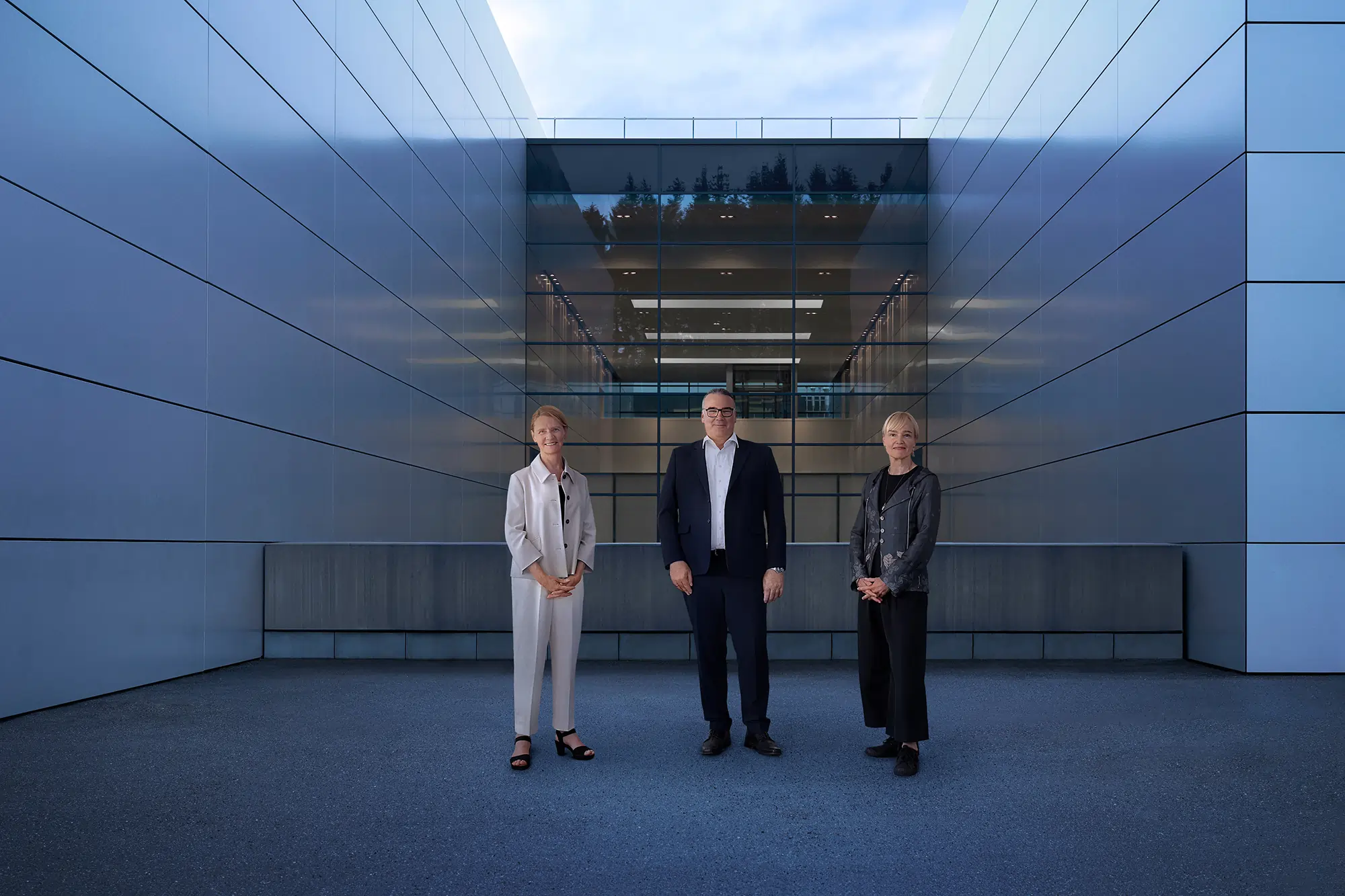
Prof. Dr. Lucia Reisch, Prof. Dr. Matthias Finkbeiner and Prof. Dr. Mette Morsing (from left to right)

Those overseeing the sustainability strategy report to the entire Executive Board on their topics on an ad hoc basis. The material impacts of the individual topics are managed operationally in the respective Executive Board portfolios.


To control and measure sustainability in business processes and contributions to ESG aspects in a targeted way, the Porsche AG Group launched a software based ESG management system in 2021. Furthermore, the Porsche AG Group determined performance indicators, which illustrate material non-financial ESG contributions and transparently demonstrate the Porsche business model’s contribution to sustainable development. Some examples of these are the decarbonization index (DCI) or the proportion of women in management.


Strategy workshops are held regularly to define the strategic direction and target-setting for sustainability. Target achievement is generally reported to and reviewed by the overseers of the sustainability strategy on a quarterly basis. Additional targets are defined and monitored directly by the responsible departments.


Risks and opportunities related to sustainability topics are managed by the Porsche AG Group’s risk management. The risk management processes of the Porsche AG Group are described in the Report on risks and opportunities. No special controls or procedures are used for managing impacts.


When decisions are made on important transactions, all relevant information relating to sustainability matters is prepared and provided to the Porsche AG Group’s Executive Board. This information is taken into account in the decision-making process.


Reporting on the topic of sustainability is generally submitted to the full Executive Board once a year as part of the Porsche AG Group’s overall strategy.

In the reporting year, the Porsche AG Group’s Executive Board and Supervisory Board dealt with, among other things, the following topics in connection with the material impacts, risks and opportunities of the Porsche AG Group:

  • Product strategy (including reduction of fleet emissions)
  • Decarbonization program
  • Sales and distribution planning
  • Resource efficiency program
  • Occupational health and safety
  • Report of the Business and Human Rights (BHR) Council on the implementation of the LkSG
  • Supply chain security
  • Promotion of equal opportunities and diversity
  • Partner to society (Corporate citizenship)
  • Customer satisfaction (Customer excitement index)
  • Integrity and management culture (Porsche Code)
  • Report on the whistleblower system
  • German Corporate Governance Code and training on cybersecurity
  • (Geo-)political developments

The complete Non-Financial Statement (part of the Combined Management Report) is available for download.

Read next

Cayenne Turbo Electric (WLTP): Electrical consumption combined: 22.4 – 20.4 kWh/100 km; CO₂ emissions combined: 0 g/km; CO₂ class: A; Status 02/2026