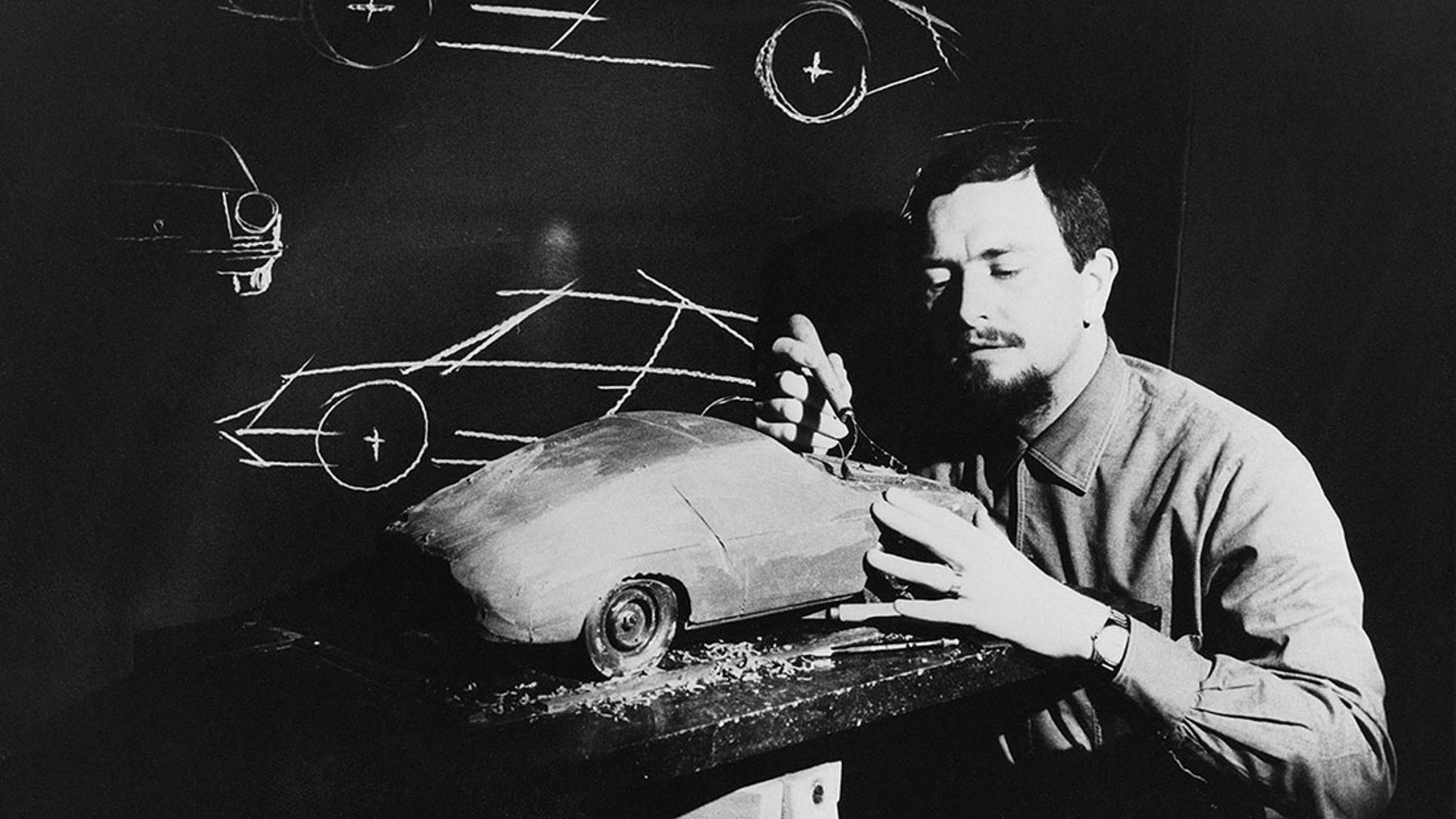
On 11 December 1935, Ferdinand Alexander Porsche was born – the man who not only shaped the form of the legendary Porsche 911 but also developed a design philosophy that continues to set standards to this day. “Good design must be honest,” was his guiding principle. For him, that meant: no unnecessary frills, no decoration for decoration’s sake. Form follows function.
From childhood to icon
The roots of his approach can be traced back to his childhood. “In those years, there were no toys to buy. So we imagined, designed and built our own,” F. A. Porsche later recalled.
This pragmatic creativity stayed with him throughout his professional life. In 1957, he joined Porsche, and by 1961 he had taken charge of the newly established design department – where he created the original 911, one of the greatest icons in automotive history. The clean lines that still define the Porsche 911 today reflect his ambition: timeless, functional, unmistakable.

But F. A. Porsche was more than the father of the 911. Under his leadership, other milestones were created – such as the Porsche 904 Carrera GTS, an uncompromising racing car with a glass-fibre-reinforced plastic body that combined lightness with elegance. A concept that became the blueprint for all future GTS models and continues to define the DNA of these special Porsche variants to this day.
-(904-001).jpg/jcr:content/HDI-76722_1_904_6-Coup%C3%A9-(1963)-(904-001).jpg)
The birth of Porsche Design
In 1972, F. A. Porsche founded the Porsche Design Studio together with his brother Hans-Peter – initially in Stuttgart, and from 1974 in Zell am See. This step marked the beginning of a new era: moving beyond pure automotive design to everyday products – yet with the same precision and innovative spirit. “Design is not an end in itself; it must be explainable from a functional perspective,” he emphasised. His creations were intended to be “honest and uncompromising, innovative and conceptual, luxurious and purist, timeless and of the highest quality.”
The studio’s first product became an instant classic: the Chronograph I (1972). The world’s first completely black wristwatch was inspired by the cockpit of the 911. Its matte finish, white indices and red seconds hand ensured perfect legibility – a principle borrowed from motorsport. “The watch must be readable at all times, from any angle and in any light,” was his directive. The Chronograph I revolutionised the watch industry and remains a style icon to this day.

Equally visionary was the P’8478 sunglasses (1978) – the first eyewear with an interchangeable lens mechanism. Initially, sales were projected at 40,000 units – in reality, millions were sold. They became a symbol of functionality and elegance. Later came the Sport Shield (P’8479), which was made famous by Yoko Ono and still enjoys cult status today.
His passion for innovative materials was evident in products such as the Titanium Chronograph (1980) – at the time, titanium was known only from motorsport and aerospace – or the TecFlex ballpoint pen, whose stainless-steel weave combined function and aesthetics.
Philosophy and legacy
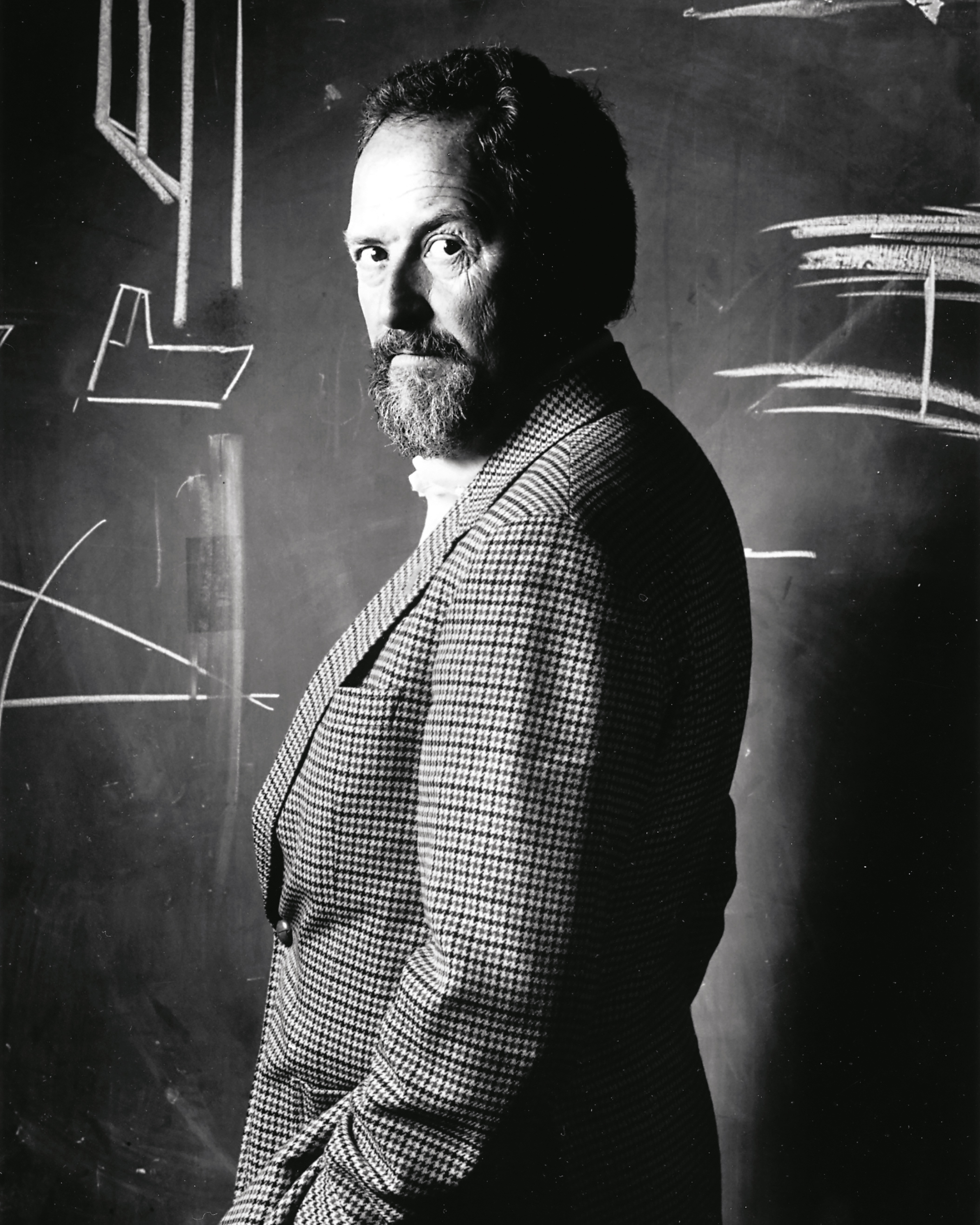
F. A. Porsche was a man of clear words and clear forms. “If you rethink the function of something, the form sometimes emerges almost by itself,” he once said. This mindset made him one of the most influential designers of his era. And it still holds true today: every Porsche Design product carries his DNA – the fusion of technical perfection, innovative materials and timeless elegance.
His love for the mountains shaped him as much as his flair for classic elegance – he was often seen in checked jackets. And although he was renowned for purist forms, he had a particular fondness for green Porsche cars, a detail that underlined his individuality. In private, he was a family man: F. A. Porsche had three sons who accompanied him on his journey.
His life’s work spans watches, eyewear and writing instruments to furniture and electronics. Yet whether it was a sports car or a toaster, the ambition remained the same. “Our creations should be lifelong companions, not subject to fleeting trends,” he once said.
On the day Ferdinand Alexander Porsche would have turned 90, we remember a visionary whose designs never age – because they were never fashionable, only ever right.